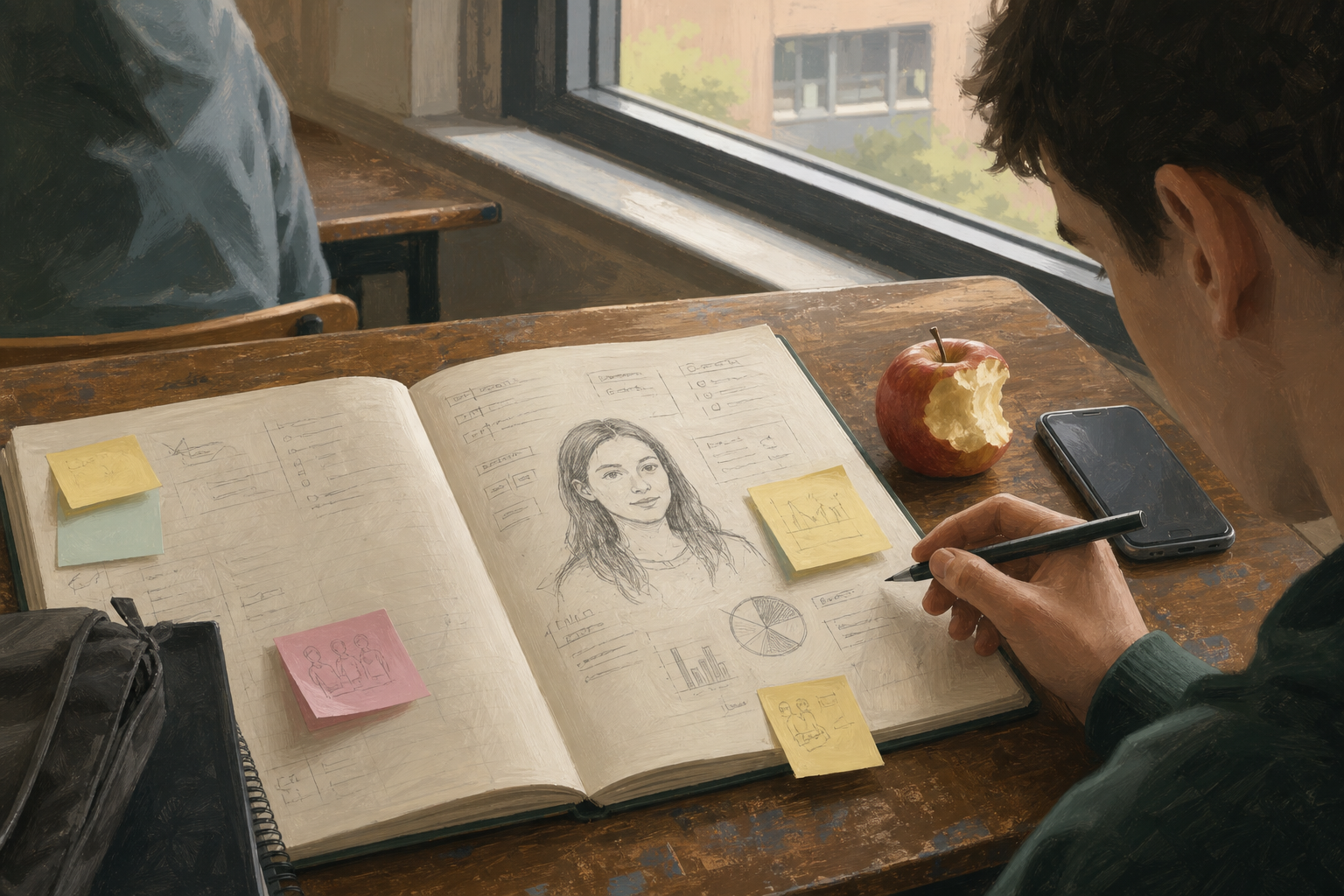
 Before you build your own, see a worked example. Imagine a mini-business proposed by a TY team in another school: a small smoothie cart that sets up beside the science block for 15 minutes at morning break and 15 minutes at lunch. €2.50 per cup. Four flavours. Fresh fruit only.
The team's first move was to picture their customer. Not 'students' (far too vague). Not 'teenagers' (same problem). They asked themselves: who specifically would walk over and buy this, and why?
The completed CustomerPersona
Here's what they came up with: one specific imagined person.
| Name | Sporty Saoirse |
| Age / Life Stage | 16, Transition Year, on the school camogie team and training three nights a week |
| What She Does | Full-time student. Coaches the under-13s on Saturday mornings. |
| Goals | Get through long school days without crashing in energy. Perform well at camogie practice straight after school. |
| Pains | The vending machine only sells fizzy drinks. The canteen queue at lunch is 15 minutes, so by the time she's served she barely has time to eat. By 4th period she's tired and grumpy. |
| Motivations | Her camogie coach talks about nutrition. She doesn't want sugar crashes before training. |
| Hangouts | The GAA pitch. The bench outside the science block at break. TikTok in the evenings, follows two GAA highlight accounts and a couple of food bloggers. |
| Quote | "If I have to queue, I'd rather just stay hungry." |
Notice how specific that is. 'Sporty Saoirse' isn't a real person, but the team can now make actual decisions about her. Flavour: not too sugary, she's training. Location: right by the science block, that's where she's already standing at break. Price: €2.50, feasible from a 16-year-old's pocket money. Marketing: a sign on the GAA pitch noticeboard would reach her directly.
The 5 questions they wrote
With Saoirse in mind, the team drafted 5 questions to ask 3 to 5 real classmates. Notice none of them ask 'would you buy our smoothie?'. That's a leading question and gets a polite yes from everyone, which is useless. Instead they probe for honest information:
- What do you usually drink or eat at break and lunch?
- How long does it usually take you to get something from the canteen?
- What annoys you most about your current options at school?
- If a fresh smoothie was sold by the science block for €2.50, how often would you buy one in a week: never, once, two or three times, or every day?
- Where do you normally find out about new things going on in school?
Key pointEvery question is open (invites a story or a specific answer, never yes/no). Together they tell the team: does the problem exist? how big is it? would Saoirse pay €2.50? and how do we tell her we're there?
Quick interview drill (4 minutes)
You've seen how two open questions can surface real decision-making. Now you're going to practise asking them. Pick whichever option fits your situation right now.
Option A, on your own (the default if you're working solo at a laptop): In a notebook or scrap doc, write your honest answers to these two questions about YOUR own most recent purchase. Aim for 3 or 4 lines per answer, not a single word.
- What's the last thing you bought with your own money?
- What made you pick THAT one over the alternatives?
Once you've written them, plan a 4-minute version of the same interview to do with a parent, sibling or friend tonight. Tomorrow's homework survey will go better if you've already had one real conversation under your belt.
Option B, with a partner (only if someone nearby is at the same step): One of you is the interviewer, the other answers honestly. Ask the same two questions, listen, don't fill silences, don't suggest answers. After 2 minutes, swap roles.
Whichever option you used, when you're done notice: how much did you learn about real decision-making in just two open questions? That's the power you'll be using on real people this week.
 Chromebooks, laptops, and PCs are crucial tools for coding and digital skills education. Chromebooks are ideal for web-based applications and collaborative projects, while laptops and PCs support a wider range of programming environments and software for more intensive tasks like software development and data analysis.

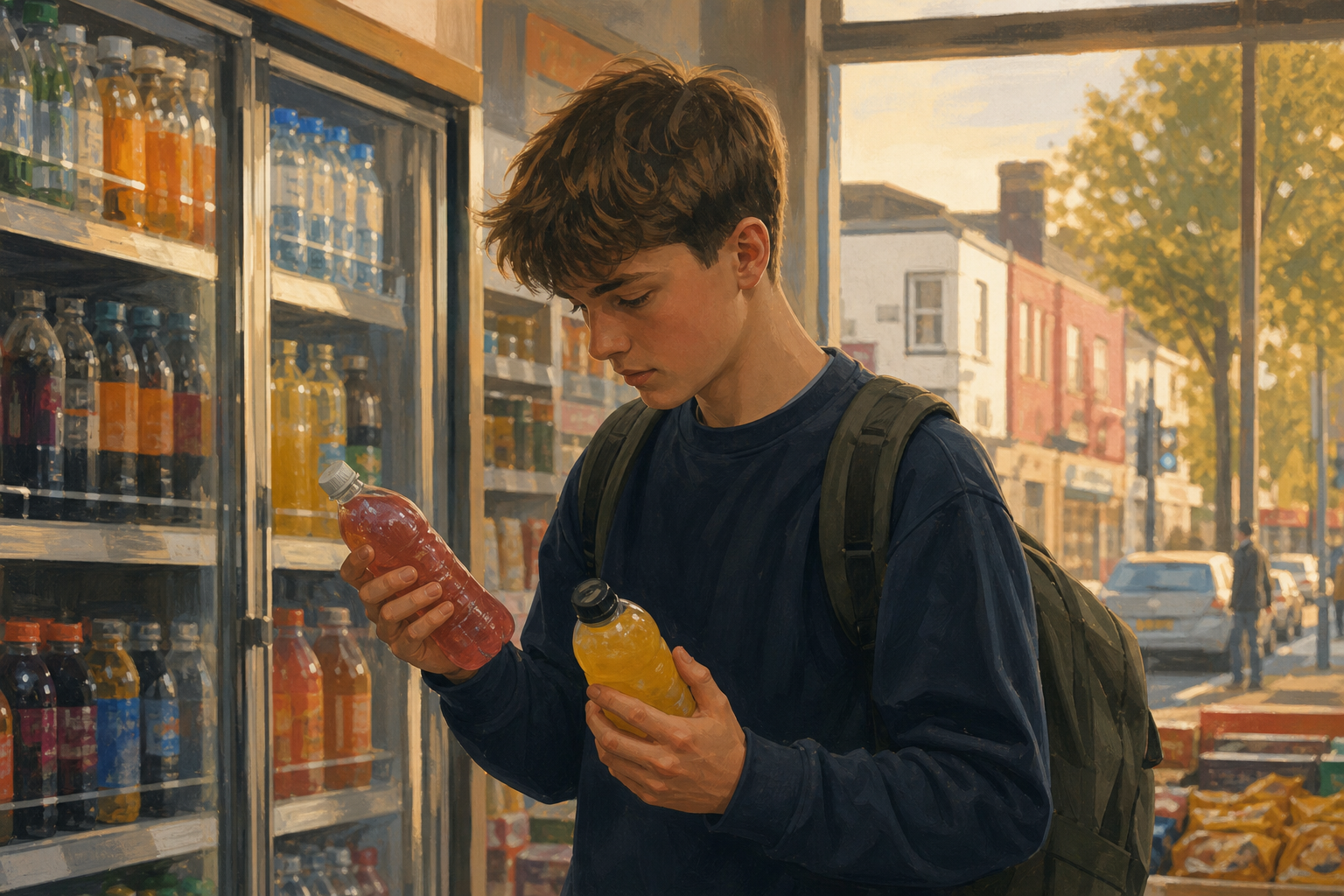 Think about the last thing you bought with your own money. Maybe it was a coffee on the way to school, a new pair of trainers, a takeaway with friends, a Spotify subscription, a gift for someone's birthday. Picture the exact moment you handed over the cash or tapped your card.