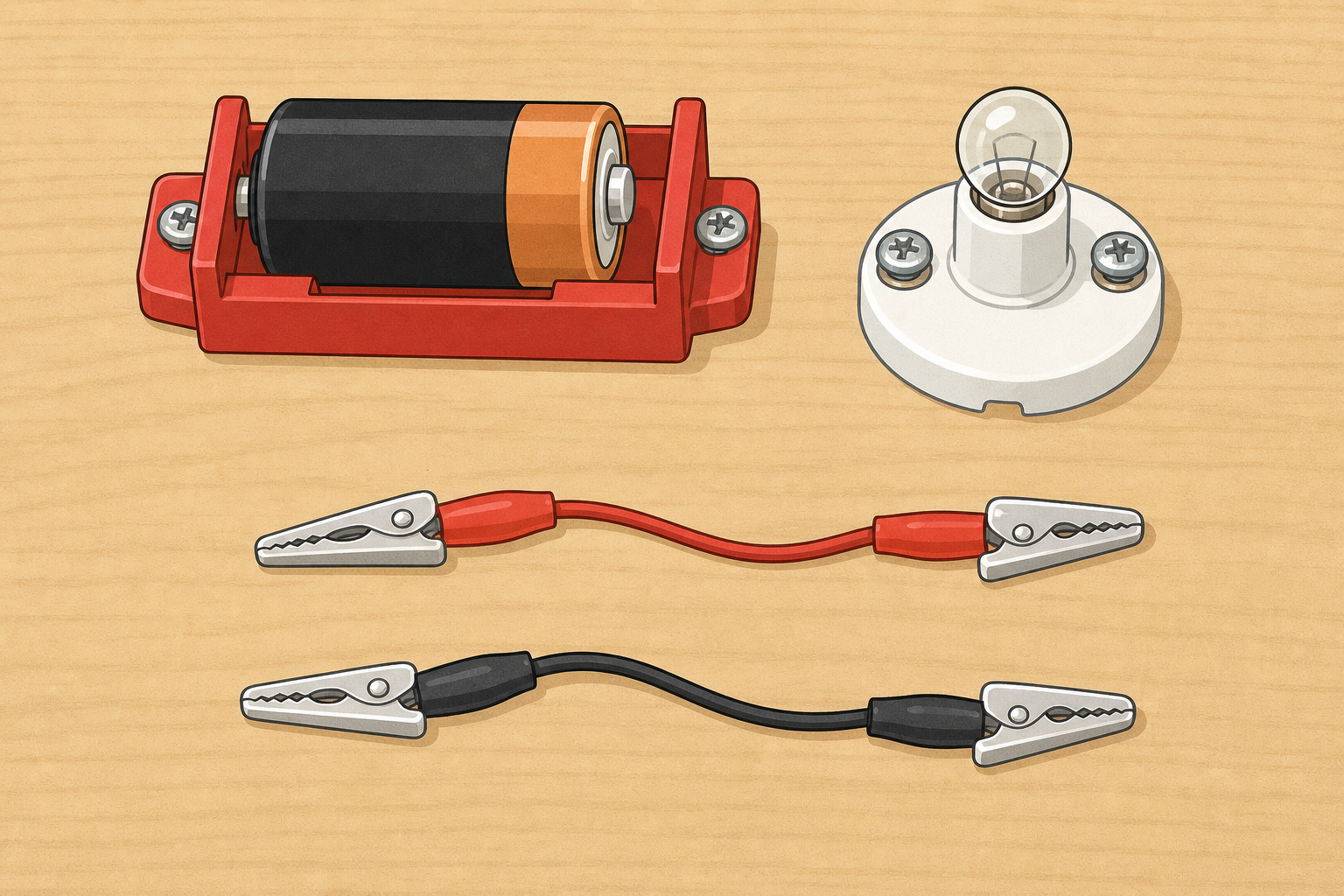
 Look at this battery, this bulb and these wires. What do you think has to happen for the bulb to light? Hands up your best guess, and say why you think that.
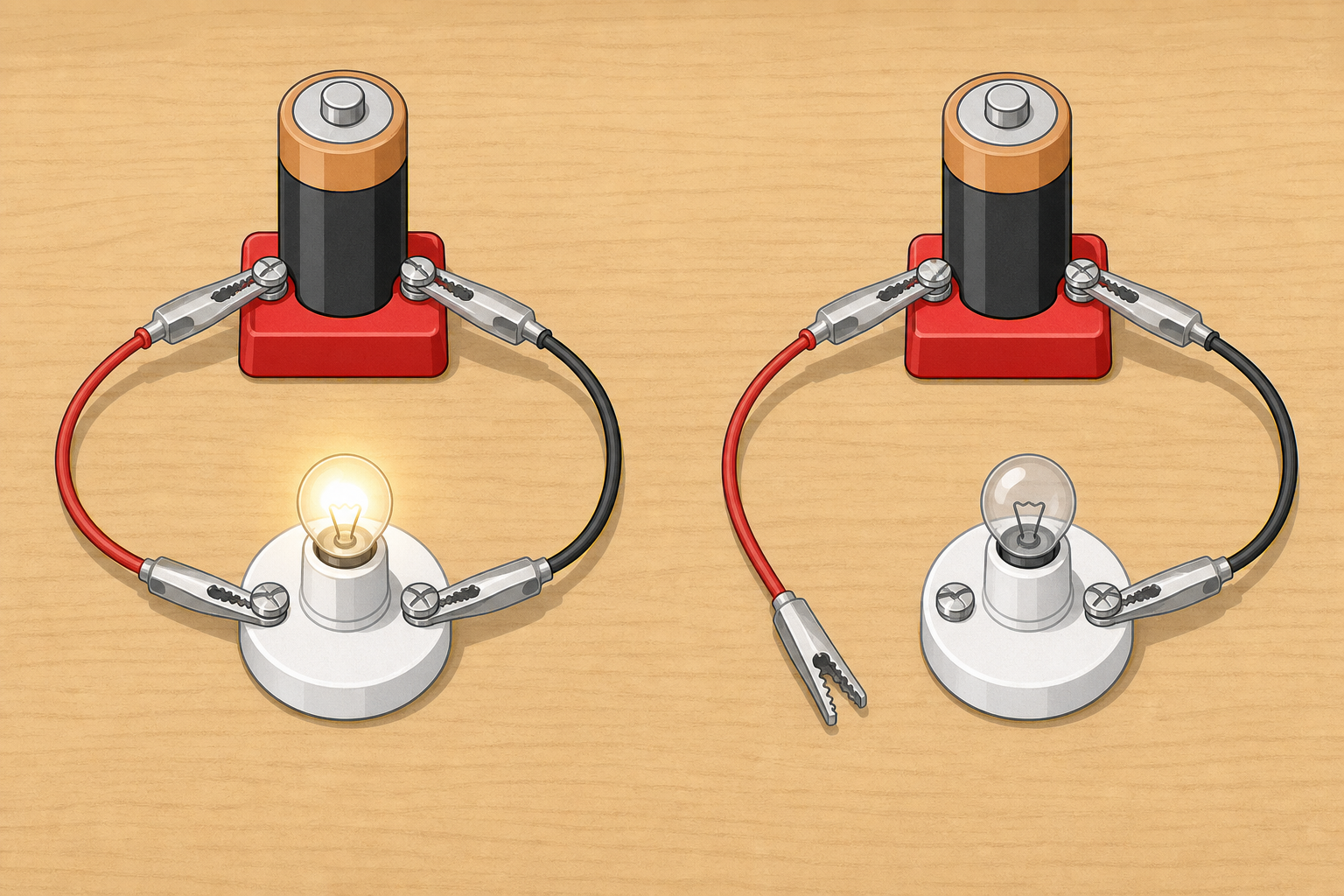 Remember those guesses: here is the idea we will test. The bulb often stays dark when the path from the battery is broken. A complete loop is a closed path with no gaps. We will build and watch for light versus dark next. Keep an eye out for breaks.
On the board is a circuit with a gap in it, and the bulb is dark.
Everything else is there: the battery, the wires, the bulb.
What is wrong, and what could go in that gap?
Before we close it, predict: what happens to the bulb when the gap closes? And what happens when it opens again?
Build a complete loop
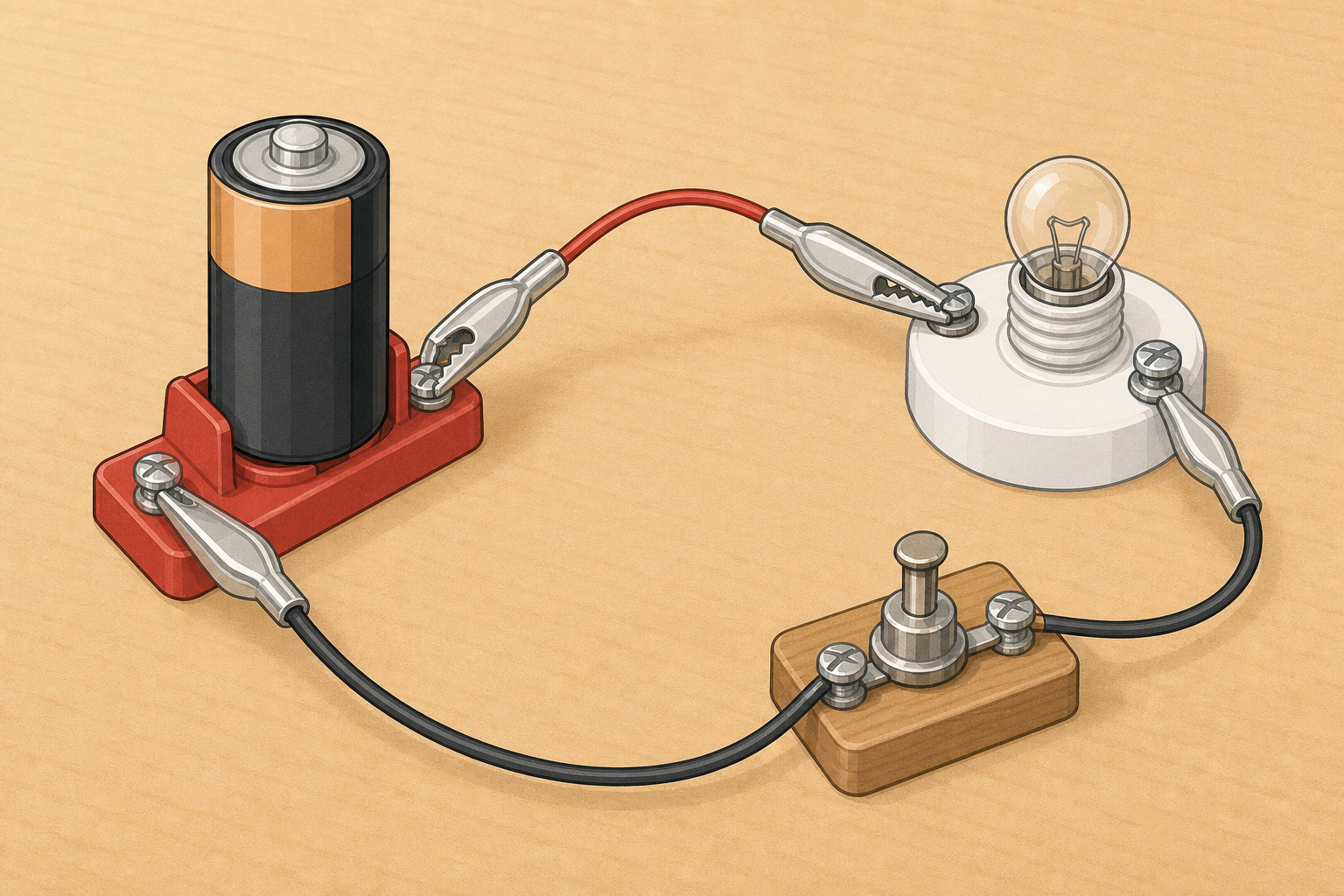
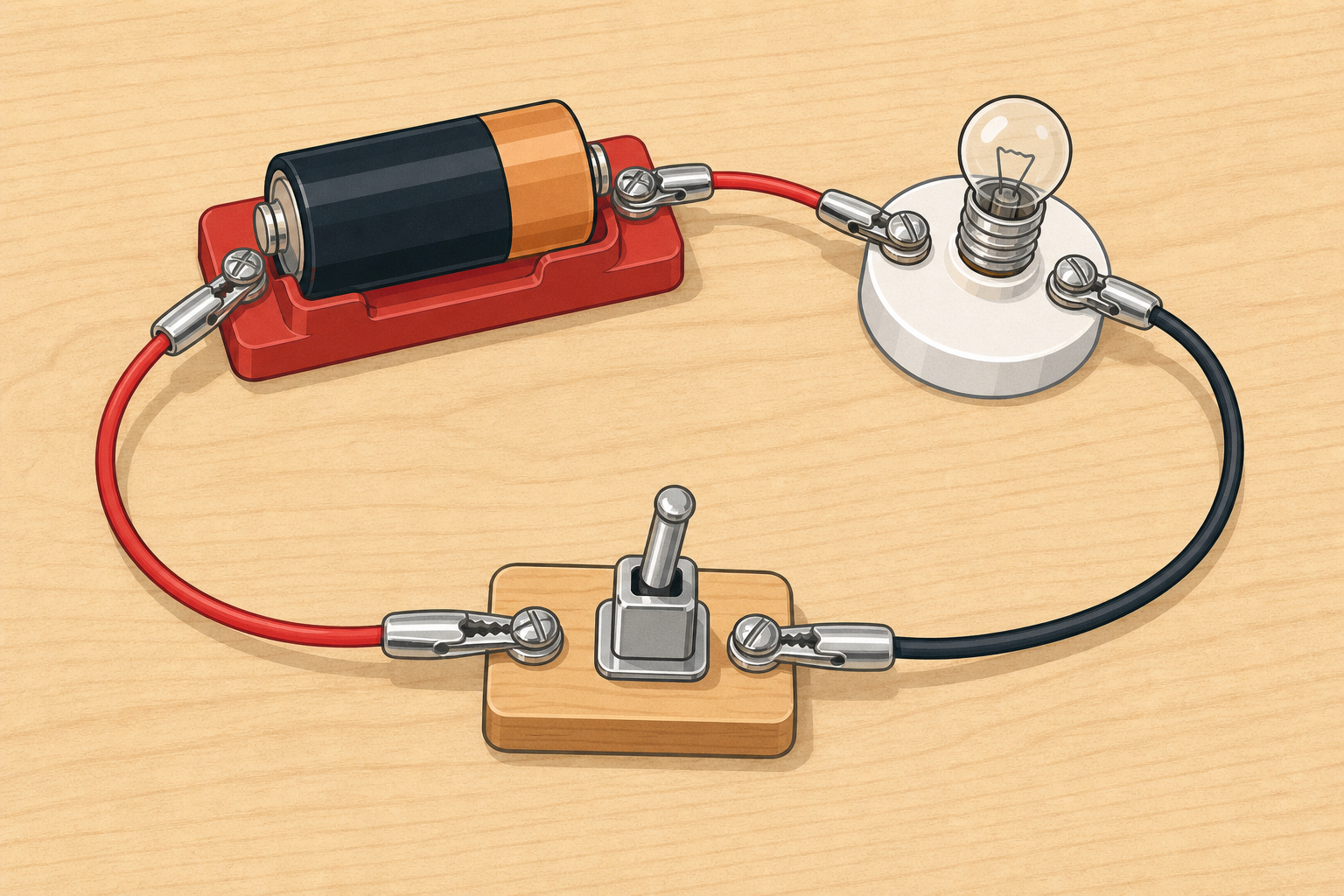
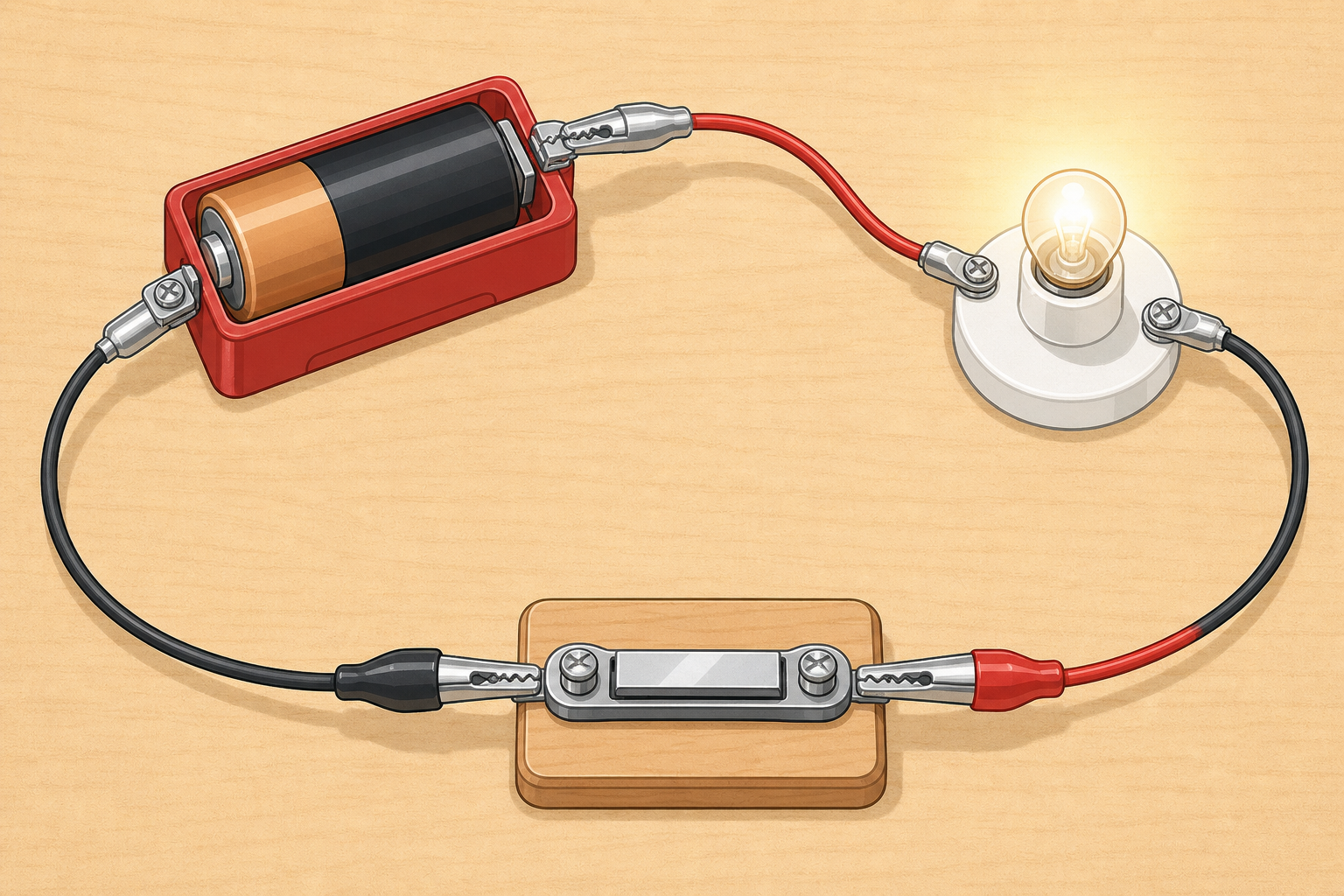 In your group, build a circuit with a battery, bulb, switch and wires so the bulb lights when the switch is closed. This is the fiddly bit: most dark bulbs are just one loose clip, not a mystery. If it stays dark, check every join: is the loop complete? Does the switch need to be closed? When the bulb lights, you have seen a complete loop in action: a closed path from one end of the battery, through the parts, and back to the other end.
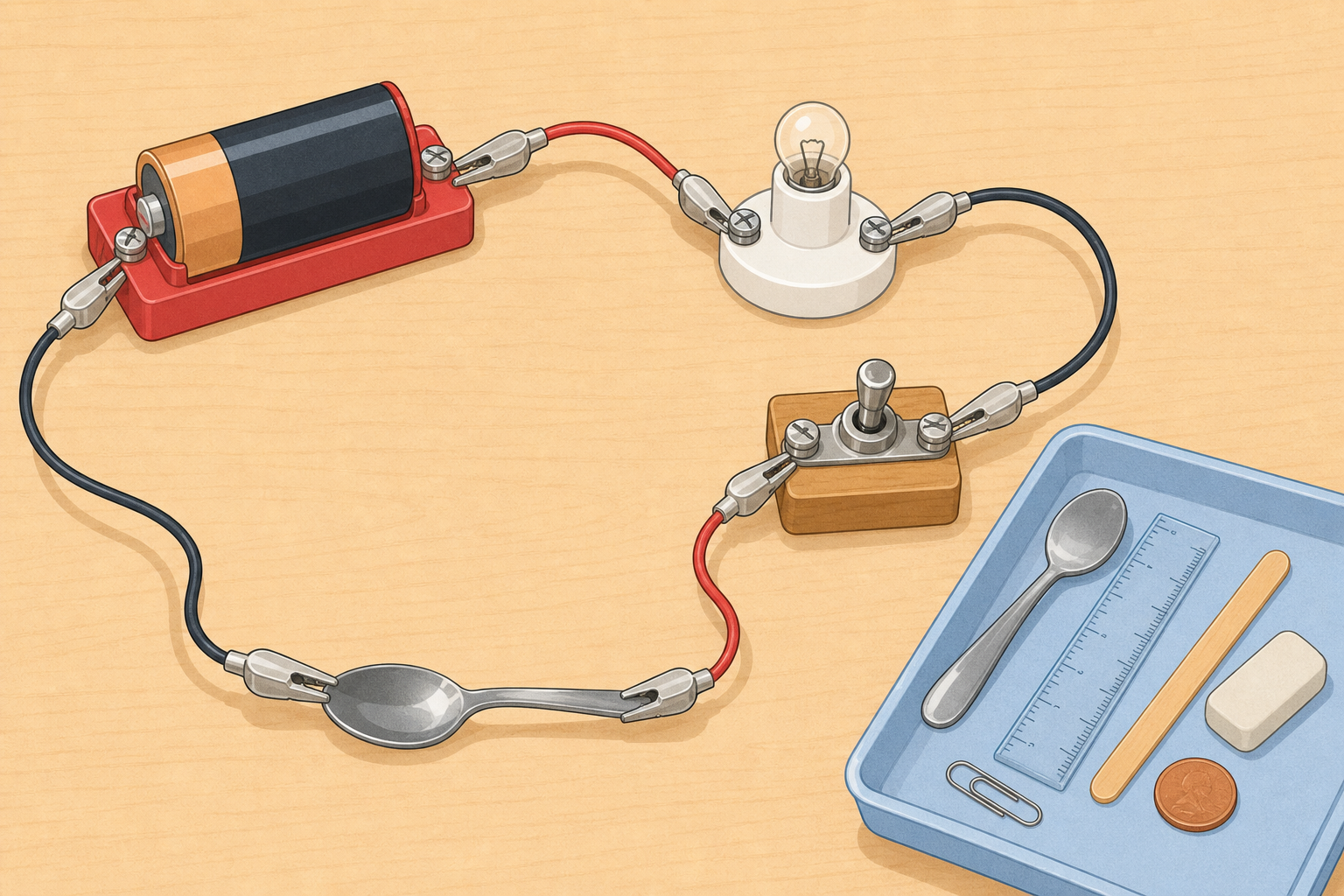 Leave a gap in your working circuit. Materials that let electricity through easily are called conductors. Materials that block the flow are called insulators.
Your group chooses at least four materials from the tray. For each one, in this order:
- Predict: light or no light? Say why.
- Jot the prediction on your Investigation Journal page.
- Place the material in the gap.
- Note light or no light straight away, before you move on.
Keep the battery, bulb, wires and how you connect them the same. Only the material in the gap changes. (Pencil lead can conduct even though it is not a metal — you do not have to test that today.)
Unlock the full learning experience
You're previewing this lesson. Get full access to this lesson and hundreds more — each one ready to teach, with interactive activities, printable resources and pupil progress tracking built in.
This lesson is copyright of 123Learn.ie 2017 - 2025. Unauthorised use, copying or distribution is not allowed.