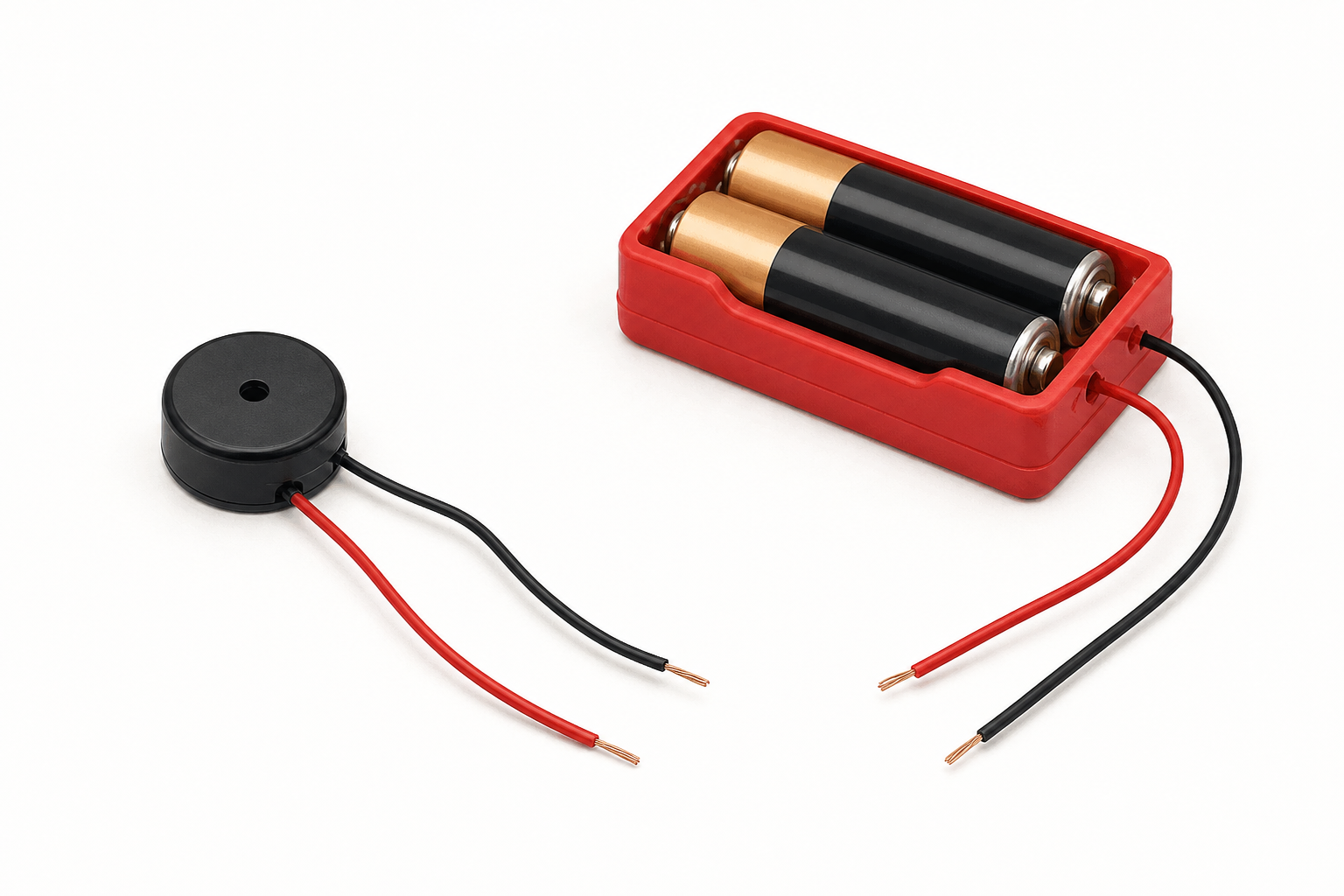
 How does a quiz-show buzzer know when to sound? What must happen in the wires for it to ring only at the right moment?
Hands up: what job do you think a switch does in a circuit?
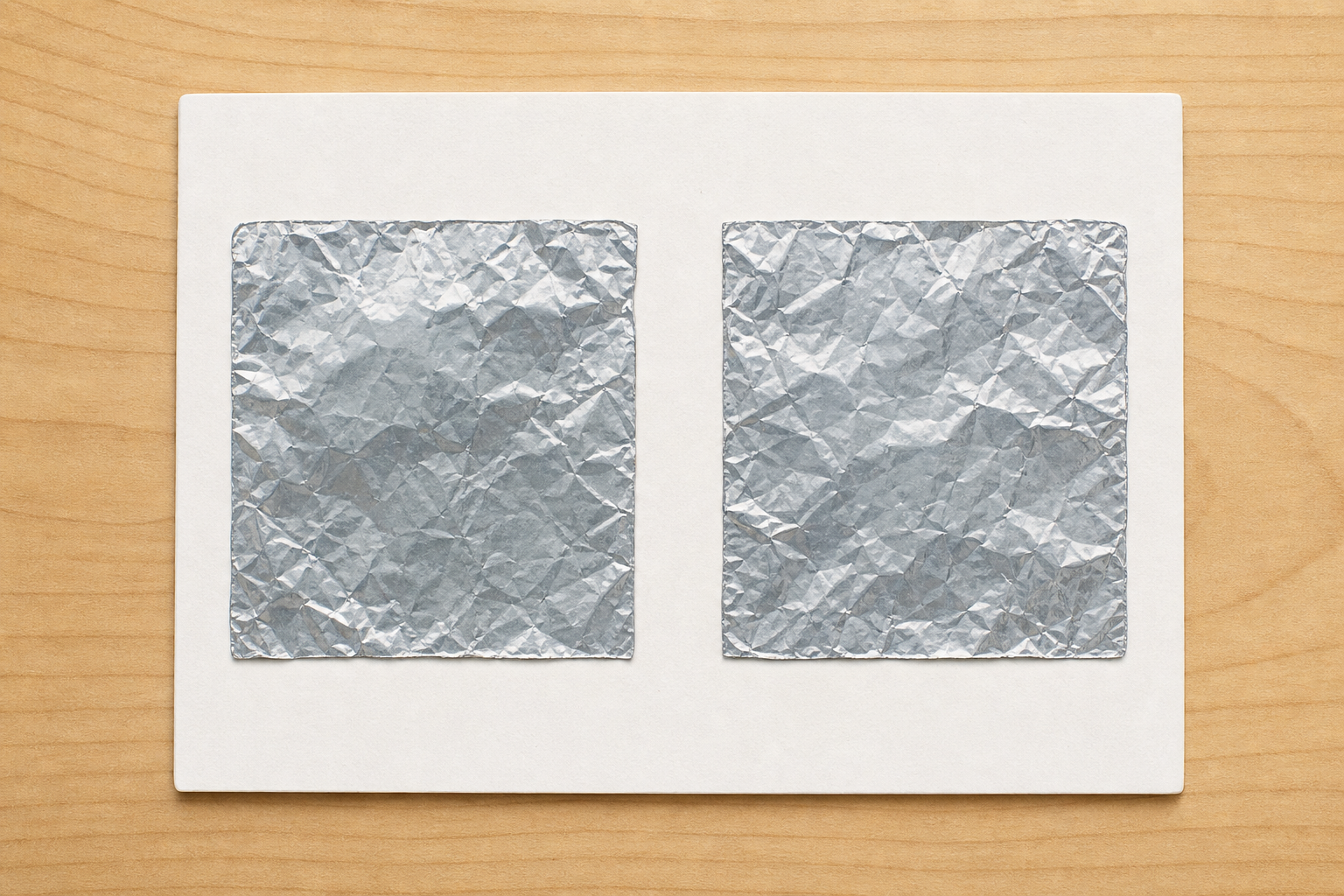 How could two pieces of foil act as a switch for a quiz buzzer?
A switch opens or closes a gap so electricity can flow or stop. Without a complete path, nothing works.
A closed loop is a full path from one side of the battery, through the parts, and back again with no gaps.
Two pieces of foil can be contact points: metal surfaces that touch only when you want the circuit on, and that touch is the switch. Later you will use foil like that in your own circuit.
On the board is a circuit that is already complete: battery, buzzer, wires, no gaps. Watch what it does.
It buzzes, and it never stops.
A quiz buzzer only sounds when someone presses it. So what has to change? Where would you put the change, and what could sit in that space so the sound can be turned on and off?
Plan a switch-and-buzzer loop
 Two things before the kit comes out, and they are the two that are hard to find by trial and error.
One: nothing happens at all unless the loop is complete, the whole way round, back to the battery.
Two: the gap needs two pieces of metal that can touch each other. Metal lets electricity through. Card, tape and plastic do not.
How you put yours together is your group's to work out.
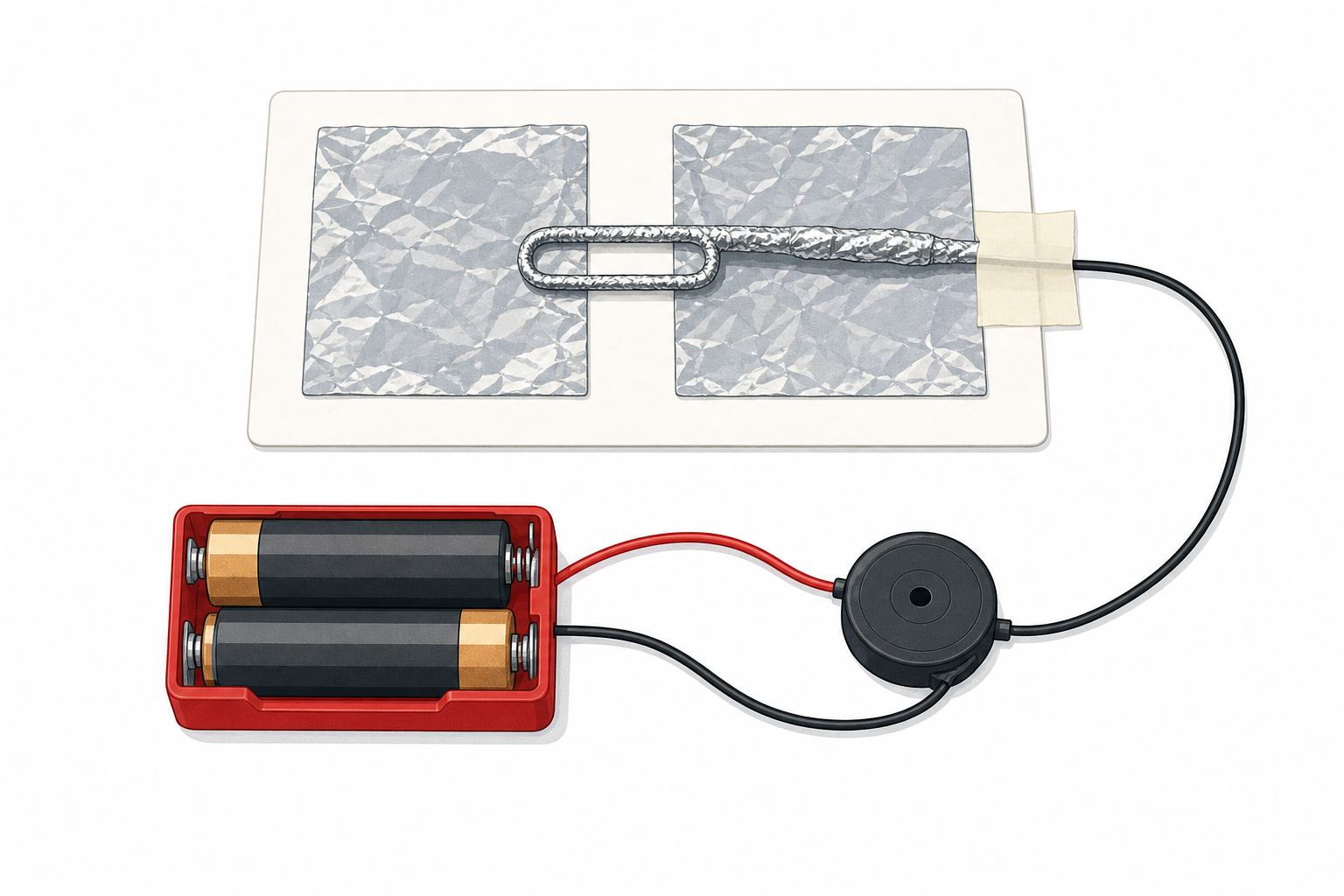
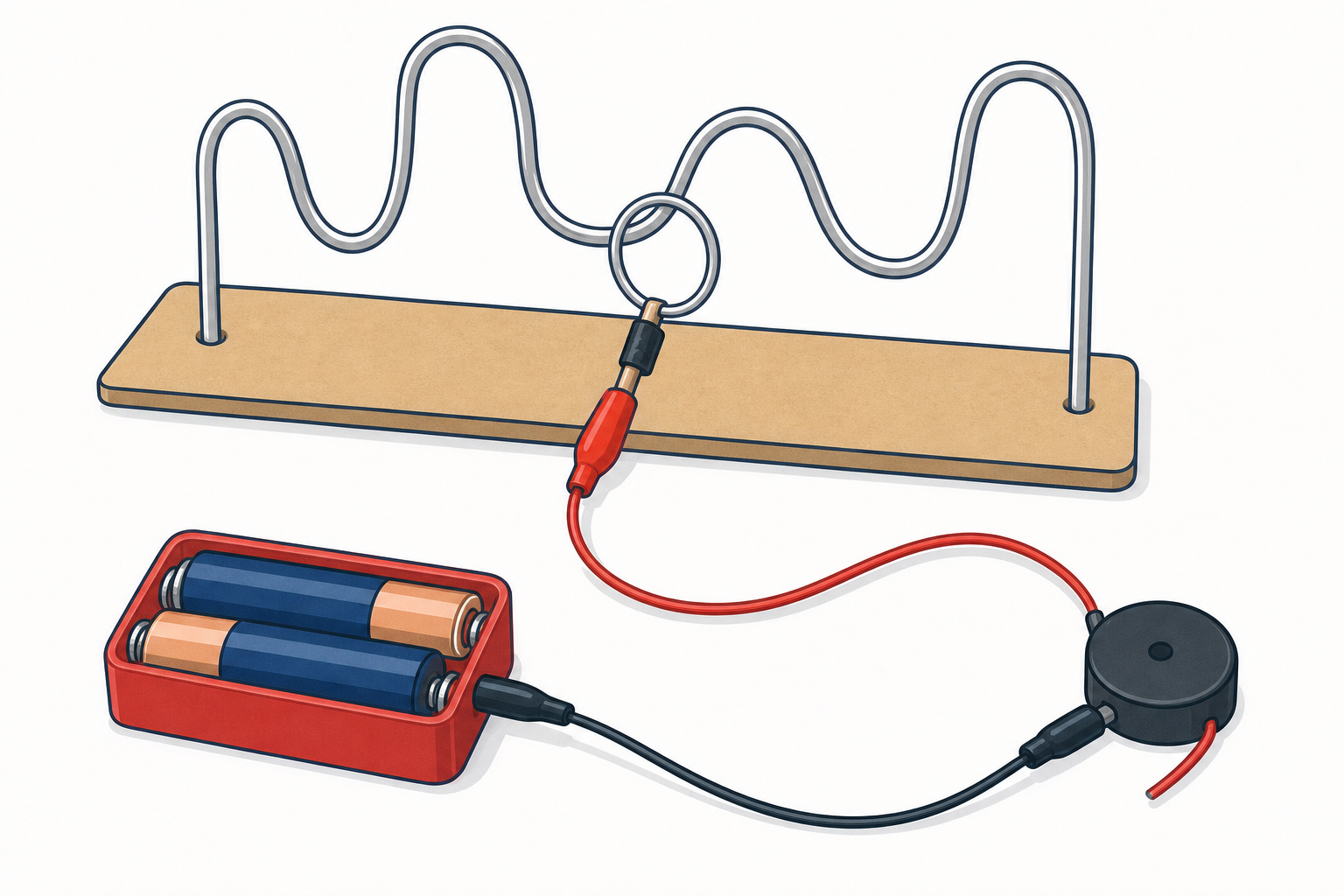 In your group, build a circuit that does a job. Choose a quiz buzzer or a steady-hand game.
Quiz buzzer: stick two foil pads on card so they sit as a gap in the loop. One pad links toward the battery path and the other toward the buzzer. A foil-wrapped paperclip wand closes the loop only when it touches both pads at once. Wrong pads stay open (no path).
Steady-hand: a bent paperclip or wire track is one side of the gap; a looped wand is the other. When the wand touches the track, the loop closes and the buzzer sounds.
Your circuit must use a battery, wires, a buzzer or bulb, and two contact points that touch only when you want it on. Use the ordered steps on the board as your checklist while you build and test.
If your circuit will not work, rebuild it on the board planner first and find the break in the loop, then go back to the kit.
Check your quiz-buzzer loop
Unlock the full learning experience
You're previewing this lesson. Get full access to this lesson and hundreds more — each one ready to teach, with interactive activities, printable resources and pupil progress tracking built in.
This lesson is copyright of 123Learn.ie 2017 - 2025. Unauthorised use, copying or distribution is not allowed.