Hand each pupil their own Drawing Record page at the start of this step, and hand each group a card set and string. The cards in each set are: grass, bramble, oak leaf, caterpillar, rabbit, mouse, blue tit, hedgehog, fox, owl, plus arrow cards.
Pacing — protect the drawing. Split this 20-minute slot roughly as ~12 minutes building and checking, then ~8 minutes drawing. Call the transition aloud at the 12-minute mark: 'Stop building, even if you have more links to add — now everyone draws what you have.' The per-pupil drawing is the recording that the summary and homework lean on, so it must not be the beat that gets squeezed out. For groups still building when you call time, the five-link minimum is enough to draw; they do not need a 'finished' web. If a group is racing ahead, let them keep adding links on paper as they draw.
Give every group the printed card set. The sketch-your-own-cards substitute is a last resort only — do not use it just to save printing, because time spent drawing cards eats straight into the web-building and the per-pupil web drawing, and those groups will overrun. If you genuinely cannot print full sets for a group, give them the smaller five-card set (grass, rabbit, mouse, fox, owl) or a partial template with the producers already placed, so their build time goes on the web, not on making cards.
There is no single 'right' web, this is the open beat, let groups decide which links to show. Good links to look for: grass and bramble feed the rabbit; the oak leaf feeds the caterpillar; the caterpillar feeds the blue tit; seeds and grass feed the mouse; the fox eats both rabbit and mouse; the owl eats the mouse; the hedgehog eats caterpillars and beetles. The key idea is shared food and shared predators, that is what makes it a web.
Watch for arrows pointing the wrong way, the food-to-eater direction is the thing to keep correcting. Each pupil records their own web on their Drawing Record page.
Differentiation: give a struggling group a smaller card set (grass, rabbit, mouse, fox, owl); challenge a fast group to add the sun and an arrow to the soil where things decay.

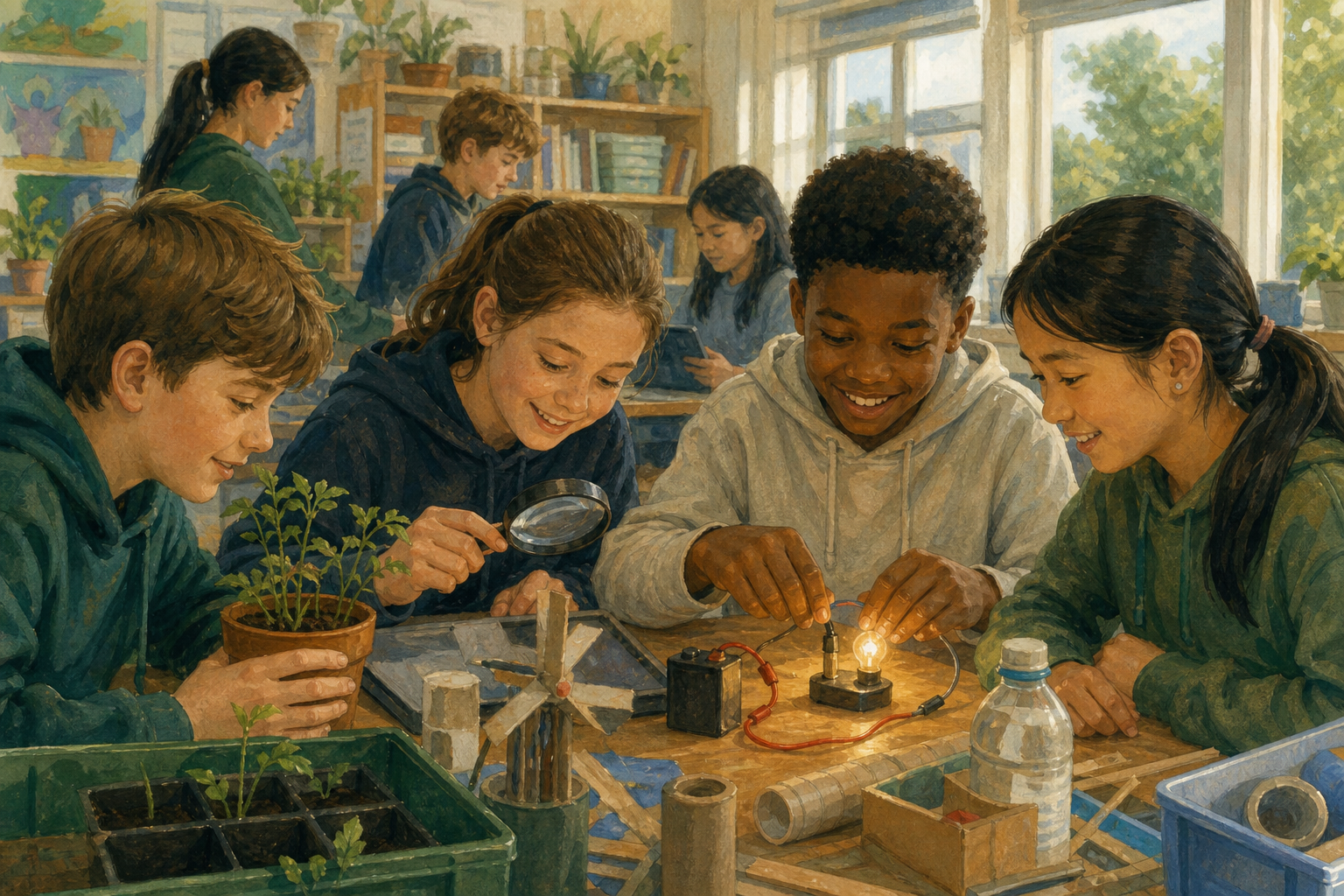 A robin pulls a worm from the school lawn. A fox trots across a field at dusk. What is the link between the grass growing in our school garden and that hungry fox? Every meal can be traced back, link by link, to one place. Where do you think all the energy in our wildlife really begins? Hands up your guess.
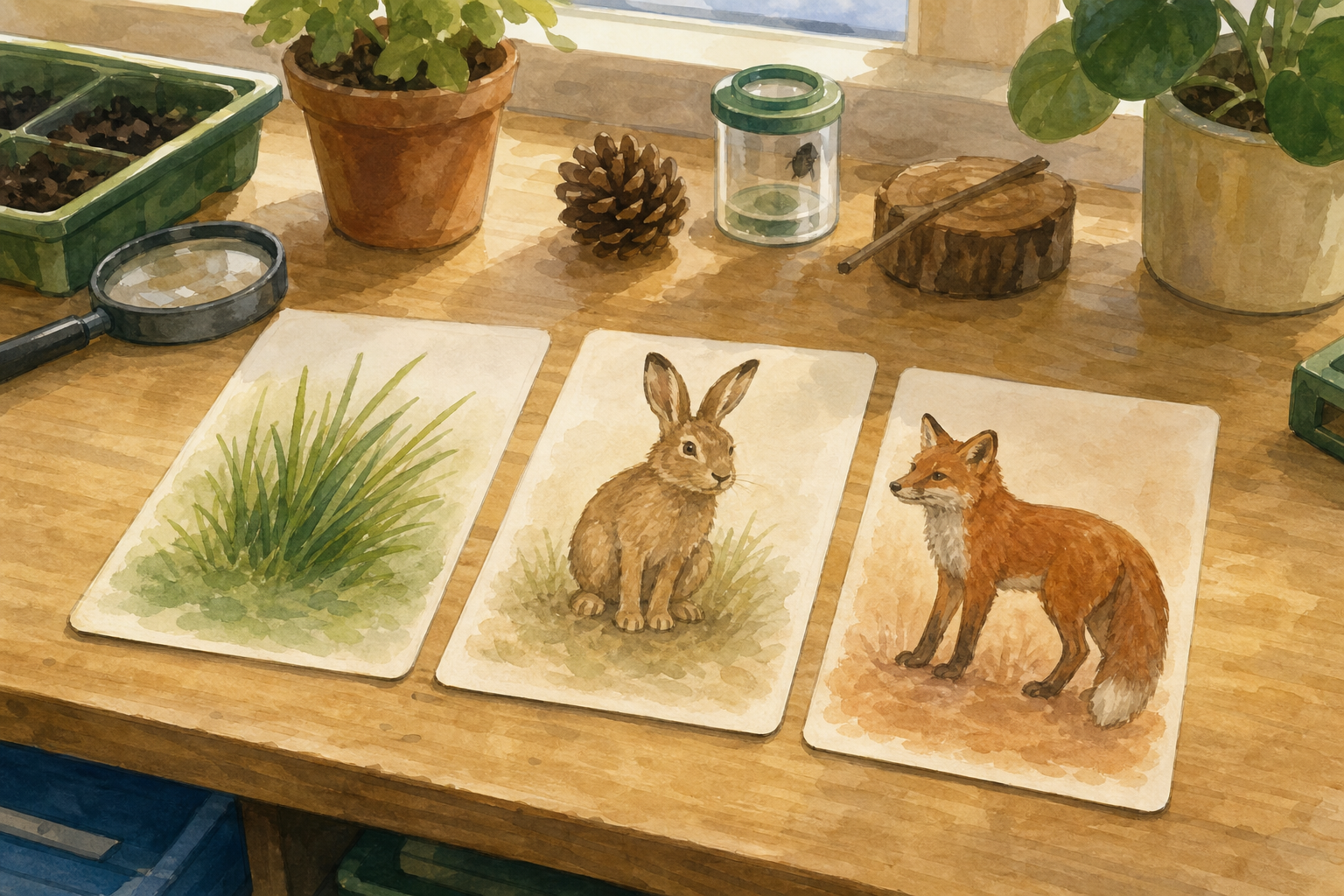 Let's watch one Irish food chain built in order on the screen. Three cards appear: grass, rabbit and fox. Watch where each arrow points and notice that it always points towards the animal doing the eating.
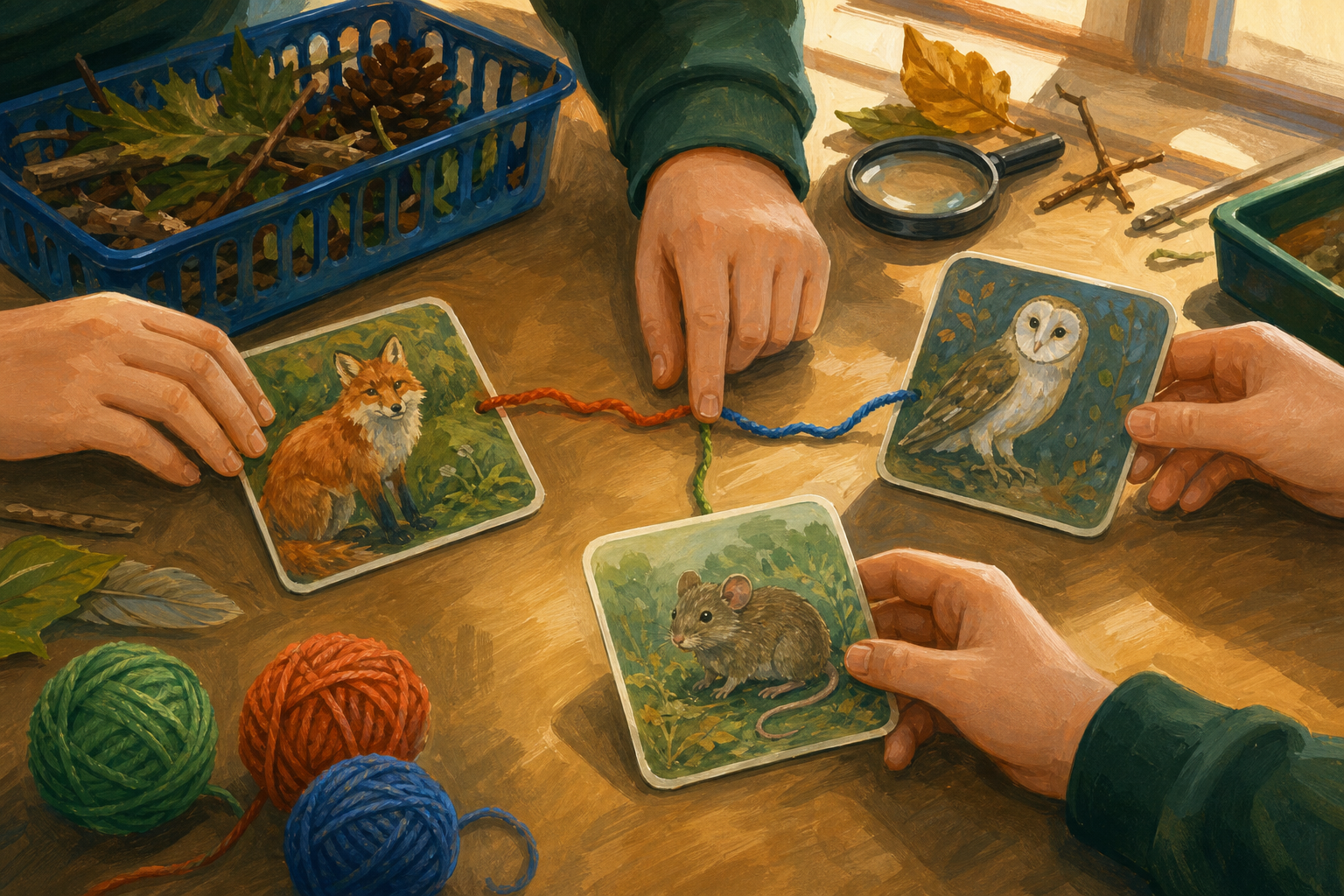 Real habitats are not single lines, because most animals eat more than one thing. In your group you will build a hedgerow web from your arrow cards and string. A link means one arrow joining a food to its eater (for example, grass to rabbit is one link). Here is the order to follow: