Mathematics
Intermediate
39 mins
Teacher/Student led
+80 XP

What you need:
IWB/Projector/Large Screen
Metre stick

Length: Metres and Choosing the Right Unit

Learn when to use metres instead of centimetres by measuring longer lengths around the school space with a metre stick, then sort and estimate distances to practise choosing the right unit.
Teacher Class Feed

Load previous activity

    1 - Getting Started ~4 mins

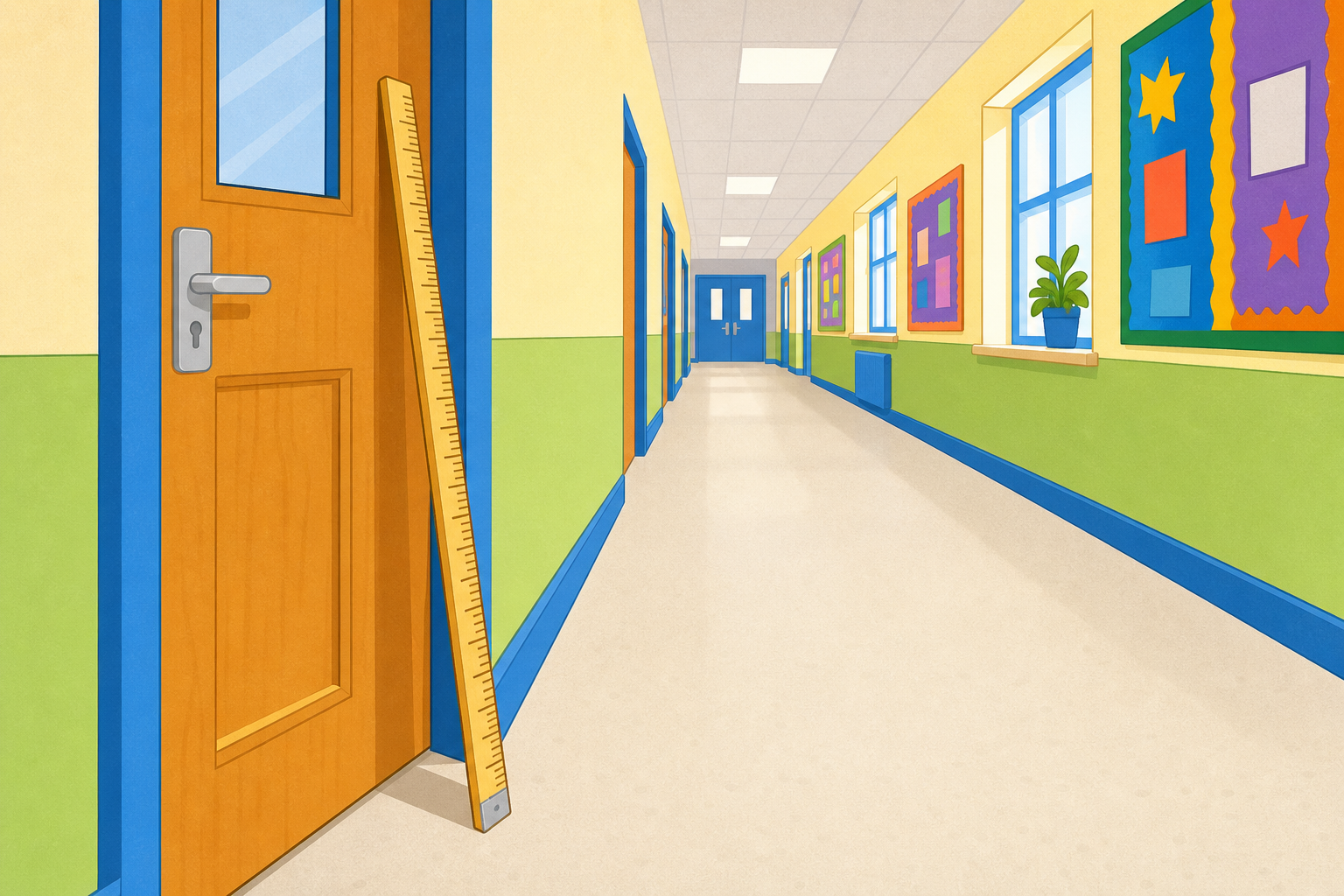
    Look at the metre stick standing beside the classroom door. Would you measure how long our corridor is in centimetres, or in metres? Hands up: which one would be easier, and why?
    2 - Watch and Notice ~8 mins

    Illustration for Watch and NoticeWatch the metre ruler on the screen. A whole metre lines up exactly with the metre stick — one stick, one metre. A length of corridor takes two metre sticks laid end to end. Now look at the ruler the teacher is holding: a desk is about 60 centimetres, less than one metre stick, and a pencil is only about 12 centimetres. The long things suit metres; the short things suit centimetres.

    3 - Try It Together ~11 mins

    Going outside

    Whole class in whatever flat space your school has room in — yard, hall, or corridor — split into three groups, each with its own metre stick and a copybook to record. Before the lesson, choose three lengths to measure: a Short one (a bench), a Medium one (the width of the space), a Long one (about 10 metres along the longest wall).

    Materials

    • metre stick
    • copybook
    • pencil

    Plan

    1. In your group, estimate each length in whole metres before you measure it — say your guess aloud.
    2. Lay the metre stick flat along the length, mark where it ends, then lift it and lay it again from that mark.
    3. Count one whole metre each time you lay the stick down: one, two, three.
    4. Stop when the next metre would run past the end, and say how many whole metres you counted.
    5. Swap who lays the stick for the next length, and compare your count with your group's estimate.
    If you can’t go out: indoor alternative

    If the yard is unusable, run the same Short / Medium / Long structure indoors — a bench for the Short length, the width of the hall for the Medium, the full length of the corridor for the Long.

    4 - Sort the Lengths in Your Copy ~3 mins

    COPYBOOK MOMENT

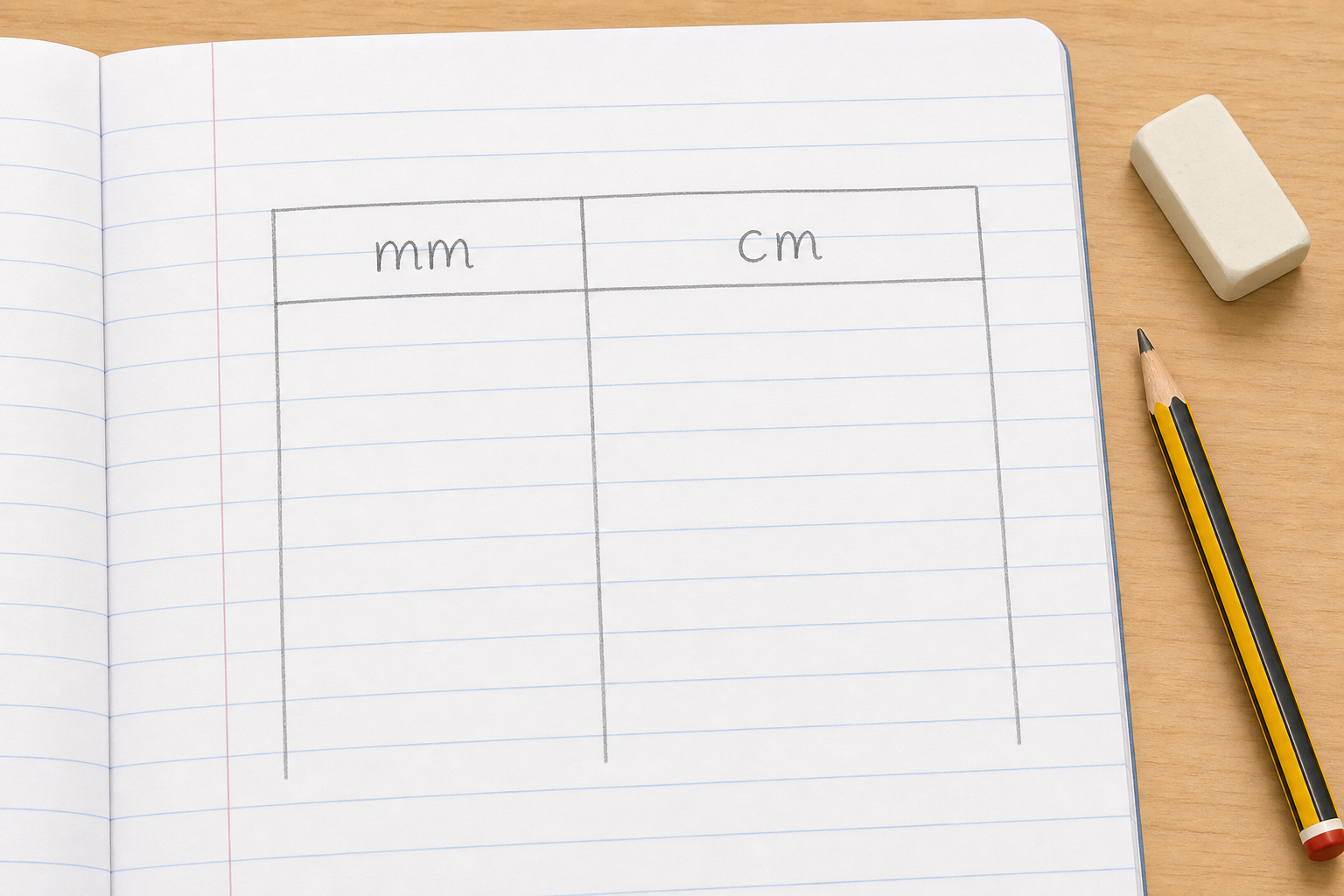
    Illustration for Sort the lengths in your copyIn your maths copy, make two columns headed "metres" and "centimetres". Then sort these six lengths into the column you would use to measure each one:

    • a hurley
    • a finger
    • the classroom
    • a book
    • the yard
    • a crayon

    5 - Class Challenge ~8 mins

    Going outside

    Whole class in your school's open space, split into three groups, each with its own metre stick and copybooks to record estimates and measurements. Mark three routes of rising length with chalk or masking tape before the lesson: the width of the classroom, the length of the classroom, and the longest wall.

    Materials

    • metre stick
    • copybook
    • pencil
    • chalk or masking tape (to mark routes)

    Plan

    1. Write your estimate in whole metres for the width of the classroom, then measure it.
    2. Write your estimate for the length of the classroom, then measure it.
    3. Write your estimate for the longest wall, then measure it.
    4. For each one, say how close your estimate was — and which estimate was closest of all.
    5. Swap who lays the metre stick after each length so everyone gets a turn.
    If you can’t go out: indoor alternative

    If the yard is unusable, mark the same three rising lengths indoors — across the classroom, along the classroom, and along the full length of the corridor for the longest.

    6 - What Did We Notice? ~3 mins

    MATHS TALK

    How do you decide whether to reach for the ruler or the metre stick? Think of one thing you would measure with each.

    7 - What's Next ~2 mins

    What we learned

    • Long things, like the corridor or the yard, are easier to measure in metres.
    • Short things, like a pencil or a finger, are easier to measure in centimetres.
    • We lay the metre stick end over end and count whole metres.

    Coming up

    Coming up

    Next we will look at how metres and centimetres are linked, so we can swap between them.

    Pupil practice
    Module 4 · Measures: Length, Weight and Capacity Measures
    Lesson 45 · Length: Metres and Choosing the Right Unit
    Download Activity Book page (PDF)
    End of lesson
    123learn · Online learning platform

    Unlock the full learning experience

    You're previewing this lesson. Get full access to this lesson and hundreds more — each one ready to teach, with interactive activities, printable resources and pupil progress tracking built in.

    Hundreds of curriculum-aligned lessons
    Interactive activities in every lesson
    Printable resources & progress tracking
    Copyright Notice
    This lesson is copyright of 123Learn.ie 2017 - 2025. Unauthorised use, copying or distribution is not allowed.
    🍪 Our website uses cookies to make your browsing experience better. By using our website you agree to our use of cookies. Learn more