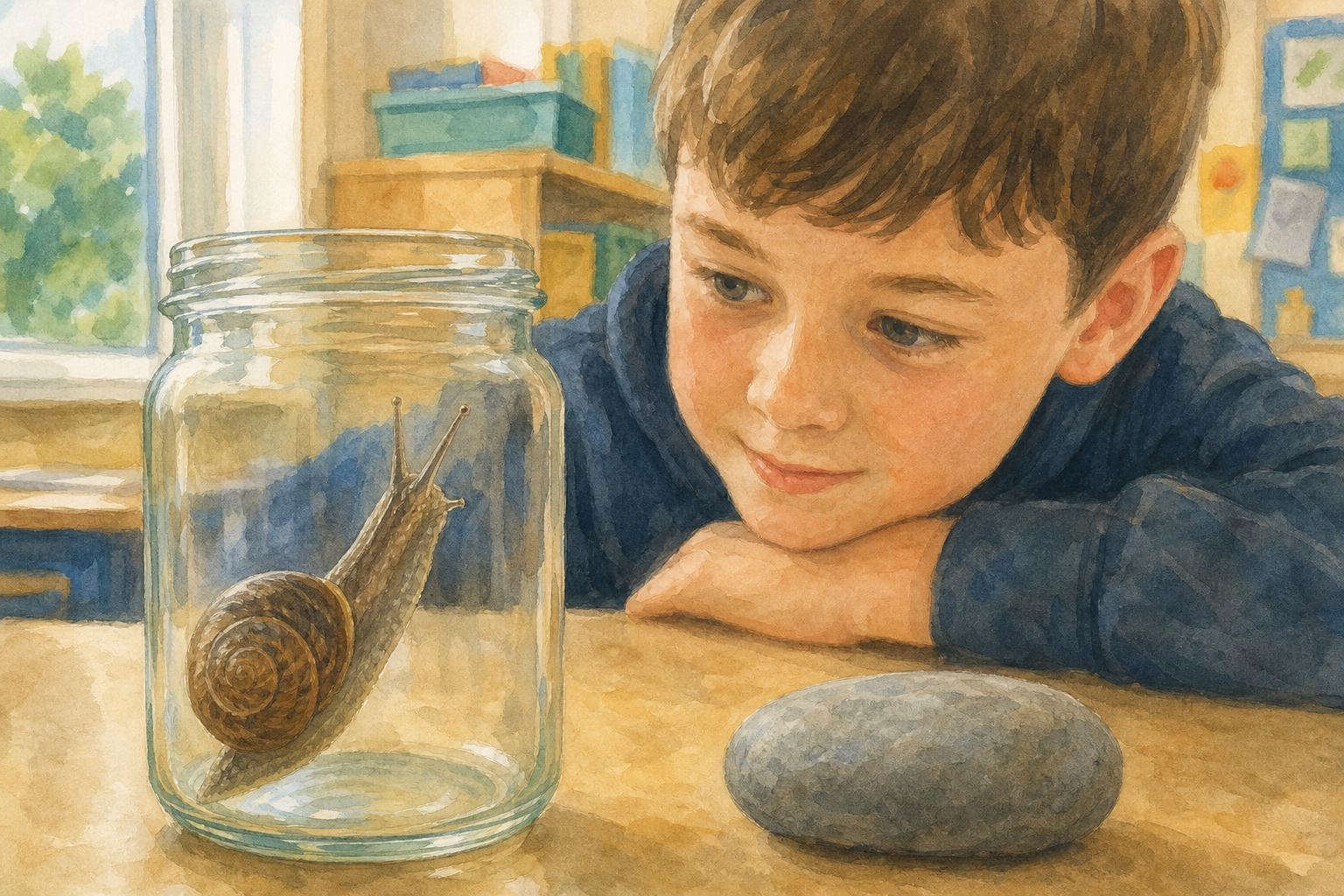
Look at the snail in the jar. Is it alive? How can you tell? Now look at the stone beside it. Was the stone ever alive? Today we are going to be careful scientists and sort lots of things into three groups: things that are living, things that were once-living, and things that are never-living. The tricky part is the middle group, so get your wondering brains ready!
Have a live snail in a ventilated jar and a stone ready to hold up. Keep this light, just a curiosity hook. Ask Is it alive? How do you know? and let two or three pupils answer before moving on.
Do not lay out the full sorting tray yet, that comes next.
Scientists sort things to understand them. We have three groups today. Read them with your teacher and look at the clue and the example for each one.
| Concept | A clue | Example |
|---|---|---|
| Living — alive right now | It moves, grows, and needs food and water by itself | A snail crawling across a leaf, or a little plant growing on the windowsill |
| Once-living — used to be alive | Ask: where did it come from? It grew on a plant or an animal | A fallen oak leaf, a feather, or a wooden lolly stick (wood comes from a tree) |
| Never-living — never alive | It was never part of a plant or animal: people made it or it is a rock | A stone from the yard, or a plastic toy made in a factory |
This table is the children's on-screen content for 2nd class. Read each row aloud and point at a matching real object from the tray as you go. The 'Concept' column is now just the group name plus a tiny phrase, so the 'A clue' column carries the detail children use while they sort. Keep the spotting clues concrete for 7–8 year olds.
Why each group matters (teacher framing): living things have needs, so we look after the snail and put it back; once-living is the trickiest group because so many everyday things came from plants or animals; never-living helps children notice the difference between things people made and things that grew.
Common misconception: children often put a fallen leaf or a feather in 'never-living' because it is still now. Stress that it once grew on a tree or a bird, so it is once-living. Ask Where did this come from? Was it ever part of something alive?
Watch carefully. I am going to be a scientist and sort some things into the three hoops. I will tell you what I notice and what I think for each one.
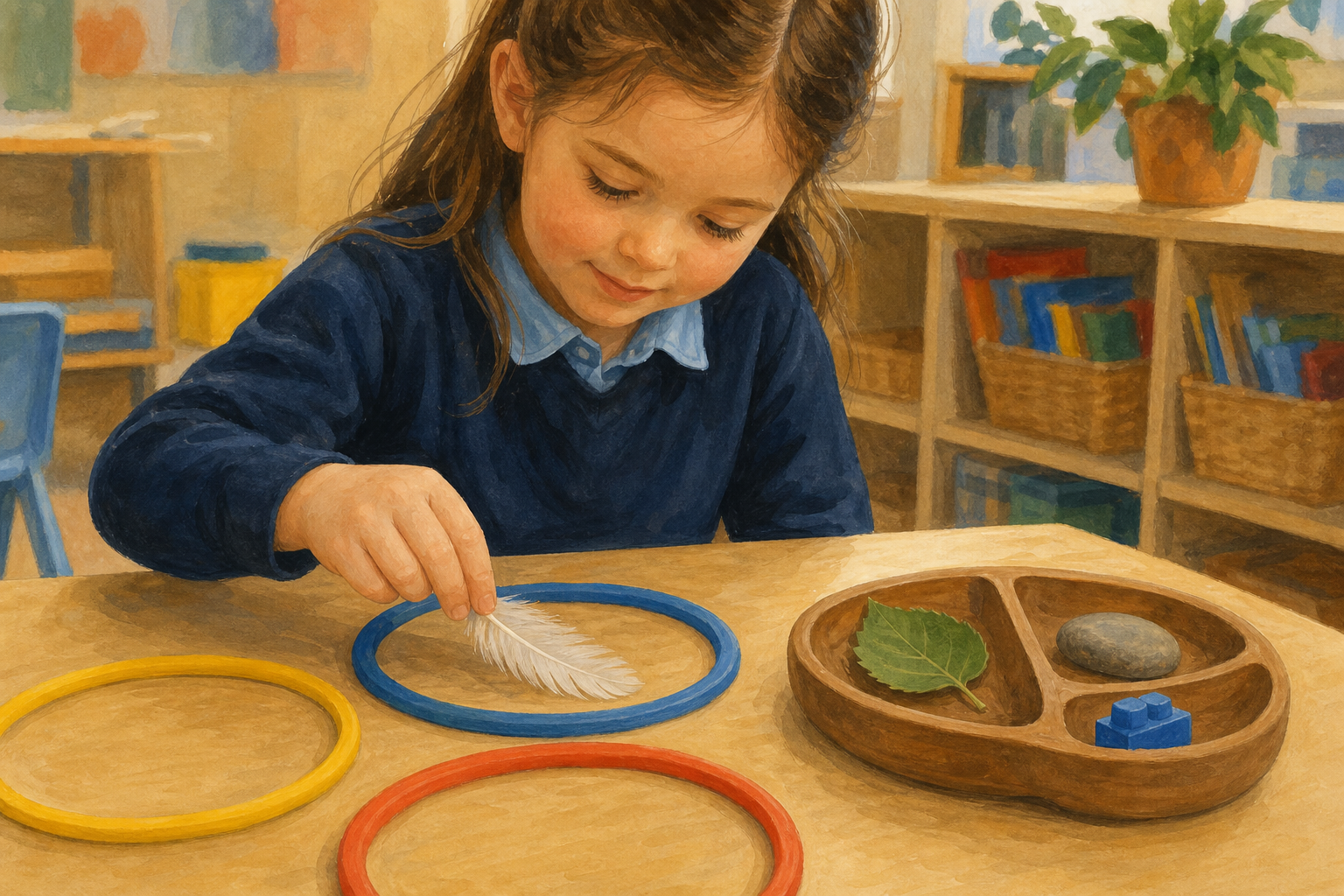
Let's listen to how a scientist thinks out loud before we have a go ourselves.
Model the full sorting cycle out loud for THREE items so children see noticing then justifying then placing. Use this script:
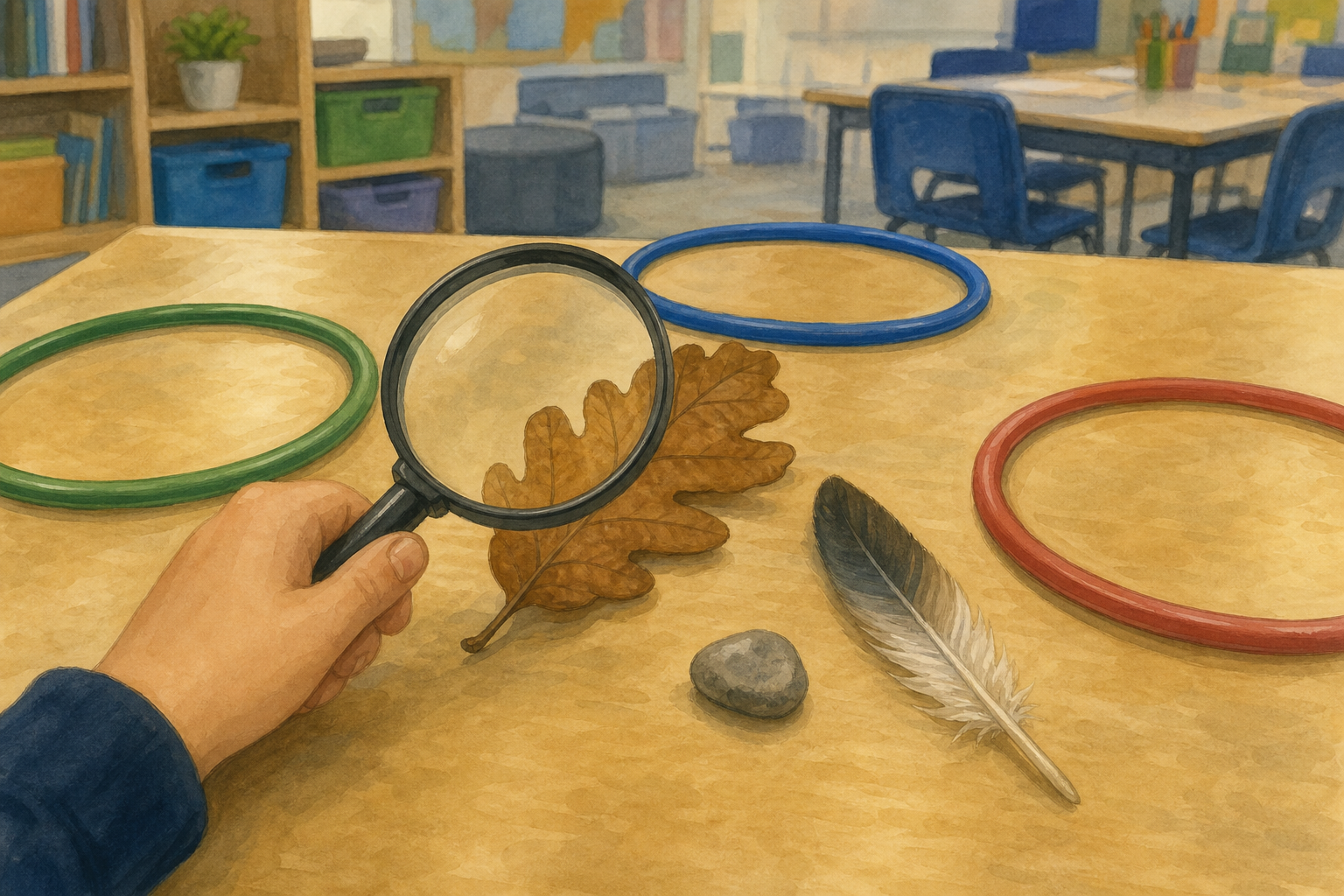
This front demo uses the one live snail. Use a magnifier as you look so children copy careful observation. Then hand the rest of the sorting to the groups.
Now it is your turn. In your group you have a tray of things: a small plant, a card with a snail photo, a fallen leaf, a feather, a stone and a plastic toy. Use the magnifier to look closely.
For each thing, talk to your group: What do you notice? Where did it come from? Was it ever alive? Then place it into the right hoop: living, once-living or never-living. Be ready to say why you put each one where you did.
When you finish, on your Investigation Journal page draw one tricky thing and draw a line to show which hoop it went in.
Groups of three or four. Each group gets a sorting tray, three labelled hoops and at least one magnifier. The one live snail stays at the front from the demo; groups use a snail photo card so every tray can show a living animal. Circulate and ask each group to justify one choice: How do you know the feather is once-living?
Record (light): in the last two or three minutes each child draws their one tricky item on the Investigation Journal page and draws a line to the hoop they chose. This gives you a record of one sorting decision per child to talk about in the share-out, without any writing.
Watch for: the feather and leaf landing in never-living. Prompt with where did the feather grow? The live snail at the front should never be left without air; keep the lid loose.
Differentiation: give a quieter group fewer, clearer items (snail photo card, stone, leaf). Stretch a confident group with the spare wooden peg or cork from the prep, asking which group it goes in.
Let's check our thinking together on the board. Six things are waiting on screen: a plant, a snail, a fallen leaf, a feather, a stone and a plastic toy.
We will take them one at a time. First, tell your group your answer to this one question: Is it alive right now? Then we will put our hands up to vote before we move it.
Drive this on the IWB and keep it strictly one question at a time so children don't have to hold the whole rule at once. For each item, show Is it alive right now? first; ask children to tell their group, then take a hands-up vote; only then reveal and, if the answer was no, ask the second question Was it ever part of a living thing? and vote again before moving the item.
The two questions are Is it alive right now? and Was it ever part of a living thing?; the three groups are living, once-living and never-living. Move the plant and snail to living; the leaf and feather to once-living; the stone and plastic toy to never-living.
Teacher-paced reveal: the sorting-tree interactive is set to explore mode (not auto-grading), so you control when each item moves. Do not drag an item until the class has answered the question on screen and voted. If a class wants to debate, pause on the question before revealing the group. Fold in the whole class: Are they right? Where would you send the feather? Compare with how each group sorted their own tray.
Let's talk together about what we sorted.
Think about: Which group was the trickiest, and why?
Discuss with your class: What is one thing you noticed that helped you decide a tricky item was once-living?
Display-only science-talk, no writing here. Use the tricky items children drew on their Investigation Journal pages as talking points. Draw out that once-living was the hard group, and the clue is always where did it come from?. Revoice good pupil reasoning: Aoife noticed the feather came from a bird, so it was once part of something alive.
Link back to their tray sorting and the board check. Keep it to two or three voices.
Great sorting today, scientists! Here is what we found out:
At home: find one once-living thing and one never-living thing around your house and tell an adult how you know which is which.
Recap the three groups by holding up one real object for each. Make sure children leave able to point to a once-living example and say why.
Return the snail outside gently and have everyone wash their hands.
You're previewing this lesson. Get full access to this lesson and hundreds more — each one ready to teach, with interactive activities, printable resources and pupil progress tracking built in.