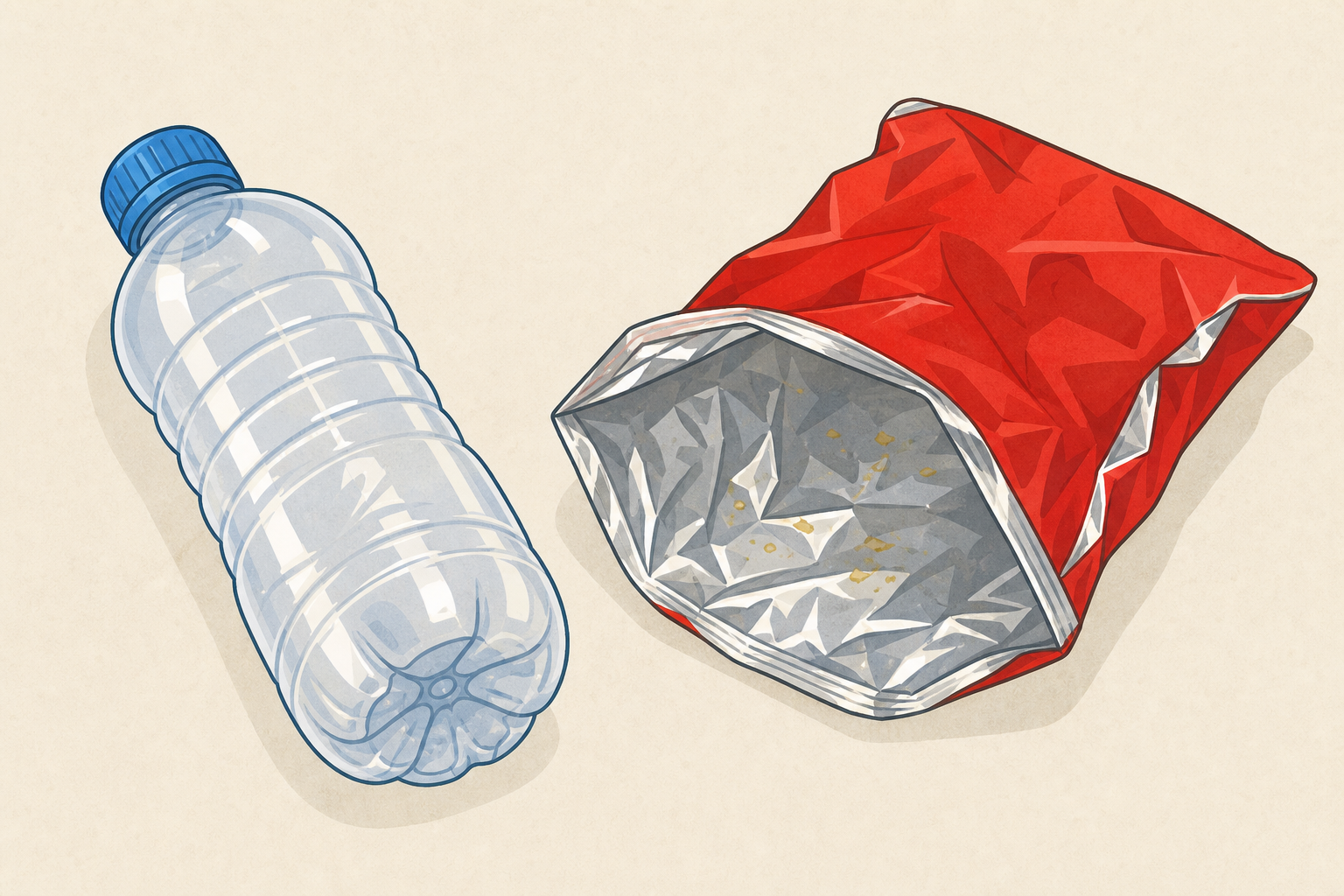
 Look at these two clean empty items: a plastic bottle and a crisp packet. Which one do you think can usually go in the recycling bin, and which one cannot? Hands up your guess, and be ready to say why.
Those two items both look like plastic, but they do not belong in the same bin. Today we use clear questions so we can sort fairly, not by guesswork.
We will sort into three bins: recycling (clean materials our scheme accepts, such as a rinsed bottle), compost (food and plant scraps such as fruit peel), and general waste (the rest, such as a greasy crisp packet or a thin plastic bag).
For every item we ask the same three questions: Is it food waste or plant material? Is it clean and dry paper, card, plastic, metal or glass? Is it a type our school recycling accepts (not thin plastic bags or greasy film)?
Before you sort anything yourselves, we agree the three questions we will all use.
Only three items go on the board, and all three are awkward on purpose: a crisp packet, a dirty tissue and a plastic bag. Hands up yes or no for each question, then see which bin each one lands in and say whether that seems fair.
Everything else is yours to sort in a moment.
Three awkward ones, to agree our questions
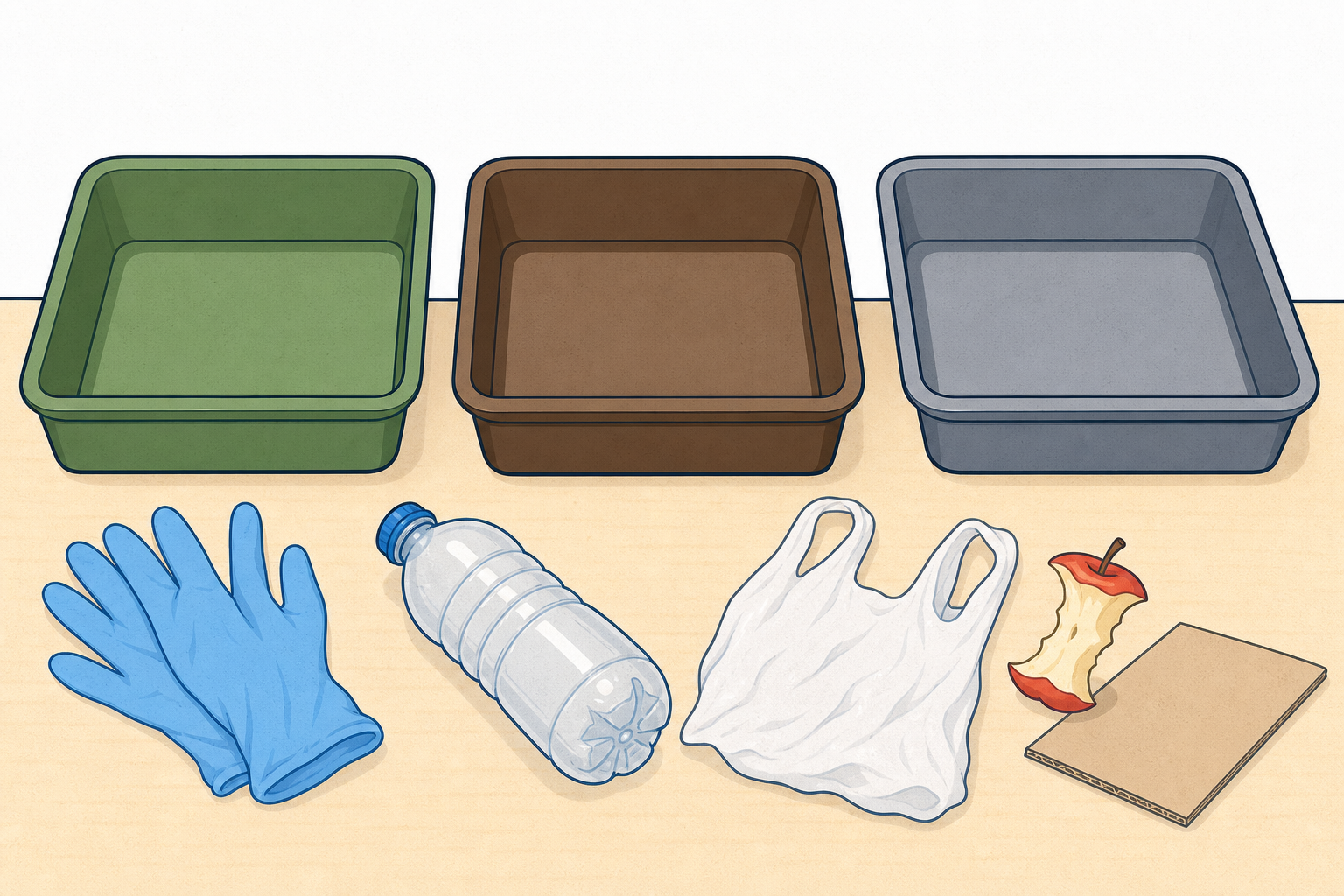 In groups, put on gloves and sort the clean sample waste on your table into three trays: recycling, compost, and general waste. Use the same three questions we used on the board. Keep a simple tally as you go: how many items land in each tray. Talk about any item your group is unsure about before you place it.
First job: on your Investigation Journal page, record only your audit. Write how many items went into recycling, compost, and general waste. Note one item that was tricky and which bin you chose, with a short why.
Second job (when the audit notes are done): think about making less rubbish in the first place. Reduce means use less so less waste is made. Reuse means use something again before binning it. Write one practical reduce or reuse idea our class or school could try.
Unlock the full learning experience
You're previewing this lesson. Get full access to this lesson and hundreds more — each one ready to teach, with interactive activities, printable resources and pupil progress tracking built in.
This lesson is copyright of 123Learn.ie 2017 - 2025. Unauthorised use, copying or distribution is not allowed.