Mathematics
Intermediate
38 mins
Teacher/Student led
+80 XP

What you need:
IWB/Projector/Large Screen

Mental Subtraction Strategies Within 100

Learn to subtract numbers within 100 using two mental strategies: counting back to take away, or counting up to find the gap. You'll decide which method is faster based on how far apart the numbers are.
Teacher Class Feed

Load previous activity

    1 - Getting Started ~4 mins

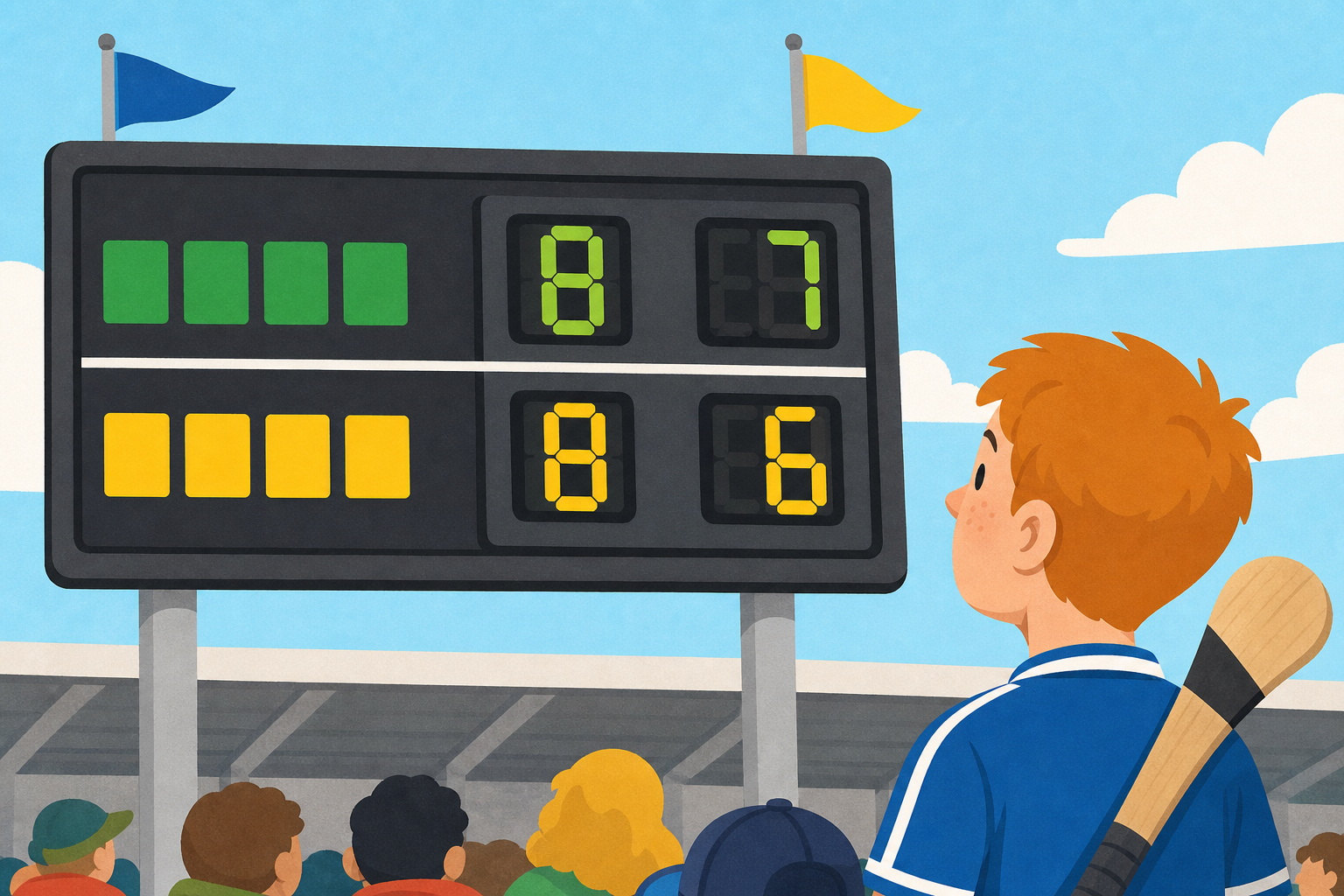
    Here is a subtraction from a hurling scoreboard: 5348.

    One way is to count back: start at 53 and take away forty-eight, jump by jump. Another way is to count up: start at 48 and see how far it is up to 53. Which way would you pick, and why?

    Tip

    Put your hand up to share. There is no wrong answer yet — we are just thinking out loud.

    2 - Watch and Notice ~9 mins

    Illustration for Watch and Notice

    475

    Watch as we take away five in small back-jumps. We start at 47 and hop back one at a time until five are gone. Where do we land?

    6030

    Now one big back-jump of thirty. There is no need for thirty little hops when one tidy jump does it.

    5247

    This time the two numbers are close together. Instead of counting back forty-seven, we jump up from 47 to 52 to find the gap. How big is that gap?

    8479

    Again the numbers are close. We jump up from 79 to 84. The size of the gap is our answer.

    3 - Try It Together ~8 mins

    Key point

    Let's work one together at the board: 464. We decide first — count back to take away, or count up to find the gap? Then a pupil makes the jumps and reads the answer.

    While we work, everyone decides the route in your own head. Thumbs up if you agree with the answer on the board, thumbs sideways if you would change something.

    After that we call out three more together: 8020, then 6358, then 7167. For each one, say whether you would count back or count up before anyone answers.

    Count back or count up?

    4 - Mark Your Choice in Your Copy ~2 mins

    COPYBOOK MOMENT

    In your maths copy, write three of the lesson's subtractions, one under the other:

    • 5247
    • 6030
    • 8479

    Beside each one, write whether you counted back or counted up, and one word on why you chose that route.

    5 - Class Challenge ~7 mins

    Now you spot the smart route. We work through these one at a time: 386, then 7030, then 6158, then 9588. The numbers get closer together as we go, so watch for the moment the gap is small enough that counting up wins.

    Tip

    Decide your route in your head before the pupil at the board starts. Thumbs up when you are ready with a choice.

    Count back or count up?

    6 - What Did We Notice? ~3 mins

    MATHS TALK

    One pupil says counting up can never really be subtracting, because you are adding jumps. Are they right? Where is the subtraction answer hiding when we count up to find the gap?

    7 - What's Next ~2 mins

    What we learned today

    • You can subtract by counting back to take away, or by counting up to find the gap.
    • Both routes give the same answer — counting up is quicker when the two numbers are close together.
    • Look at the numbers first to choose the smart route before you start jumping.

    Coming up

    Key point

    Next we move from jumps in our heads to writing addition down in tidy tens-and-units columns, carrying a ten when a column fills up past nine.

    Pupil practice
    Module 2 · The Four Operations: Mental and Written Number
    Lesson 14 · Mental Subtraction Strategies Within 100
    Download Activity Book page (PDF)
    End of lesson
    123learn · Online learning platform

    Unlock the full learning experience

    You're previewing this lesson. Get full access to this lesson and hundreds more — each one ready to teach, with interactive activities, printable resources and pupil progress tracking built in.

    Hundreds of curriculum-aligned lessons
    Interactive activities in every lesson
    Printable resources & progress tracking
    Copyright Notice
    This lesson is copyright of 123Learn.ie 2017 - 2025. Unauthorised use, copying or distribution is not allowed.
    🍪 Our website uses cookies to make your browsing experience better. By using our website you agree to our use of cookies. Learn more