Let's wiggle! Can you wiggle your fingers? Now can you stamp your feet? Touch your head and give it a little pat. Your body can do so many things! Today we are going to find all the parts of our amazing body and learn their names.
Get the class wiggling and moving to wake up their bodies. Ask How did you move your fingers? How did you stamp your feet? Keep it light and joyful, just a quick curiosity beat. The naming and the game come next.
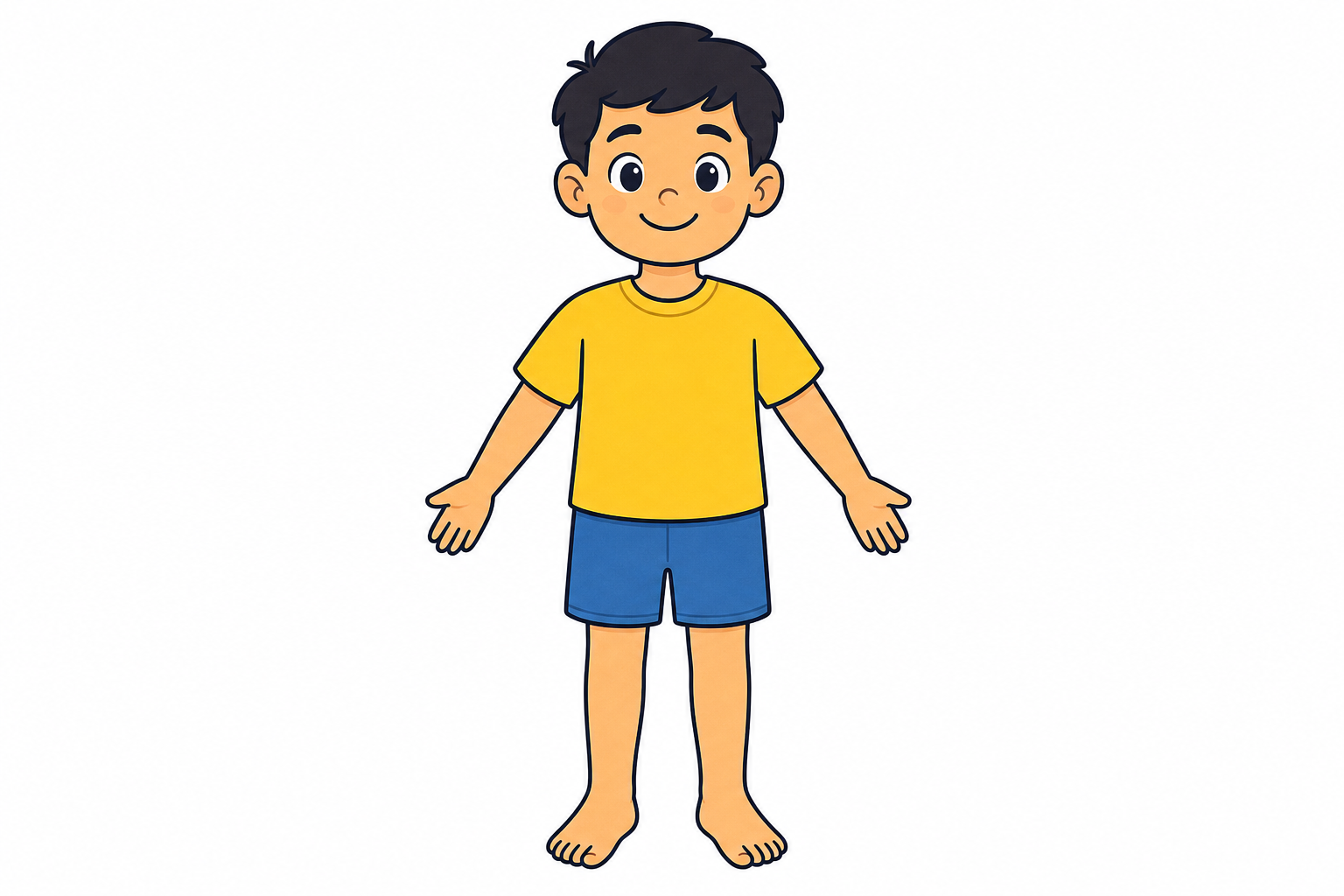
Look at the picture of the child on our screen. Let's find each part together! Where is the head? Point to it on your own body. Now the shoulders, the arms, the hands, the legs and the feet. Every part of you has a name, and every part helps you do something special.
This is the teacher's reference table to read aloud as you point at the on-screen figure. The class names each part on their own bodies as you go.
| Concept | Why it matters | Example |
|---|---|---|
| Body parts — the different bits of you, like your head, shoulders, arms, hands, legs and feet | Knowing the names helps us talk about our bodies and tell a doctor if something hurts | When we sing 'head, shoulders, knees and toes' we touch a different part each time |
| Doctor — a person who knows the parts of our body and helps us stay well | If we feel poorly, a doctor knows which part to check to help us feel better | A doctor listens to your chest and looks in your ears to help you |
The child-body figure on the IWB replaces any paper body outline — there is nothing to make. Name head, shoulders, arms, hands, legs, feet and have the children touch each part as you say it, so every part they will sing about in the next game has been shown first. Ask Who helps us stay well and knows all these parts? A doctor!
Now it is time to play! Let's sing and touch each part as we say its name. Head, shoulders, arms, hands, legs and feet! Faster and faster! Can you keep up? When the teacher calls out a body part, touch it as quick as you can. At the end we will all be soft and still, like sleepy teddies, and take three slow breaths.
Lead the body-parts song on the children's own bodies, using only the parts shown in Step 2: head, shoulders, arms, hands, legs and feet. Sing it slowly first, then speed up to make it fun. Then play a quick 'touch the part I call' game: call head!, shoulders!, hands!, feet! and the children touch each one.
Watch for the children who confuse arms and legs or hands and feet. Gently model the right part again. This is the main play burst of the lesson — keep it joyful and let everyone move.
Built-in wind-down: after about 7 minutes of play, sing one last very slow round and finish with the 'sleepy teddies' calming cue — everyone goes soft and still, sitting down, and takes three slow breaths together. This settles the energy before the seated talk in the next step. No mirror is used in this step.
Let's think together. What do your hands do? They hold and clap! What do your legs do? They walk and jump! What does your head do? It helps you think and see! Who can show us one thing they can do with their hands? Who can show us one thing they can do with their feet?
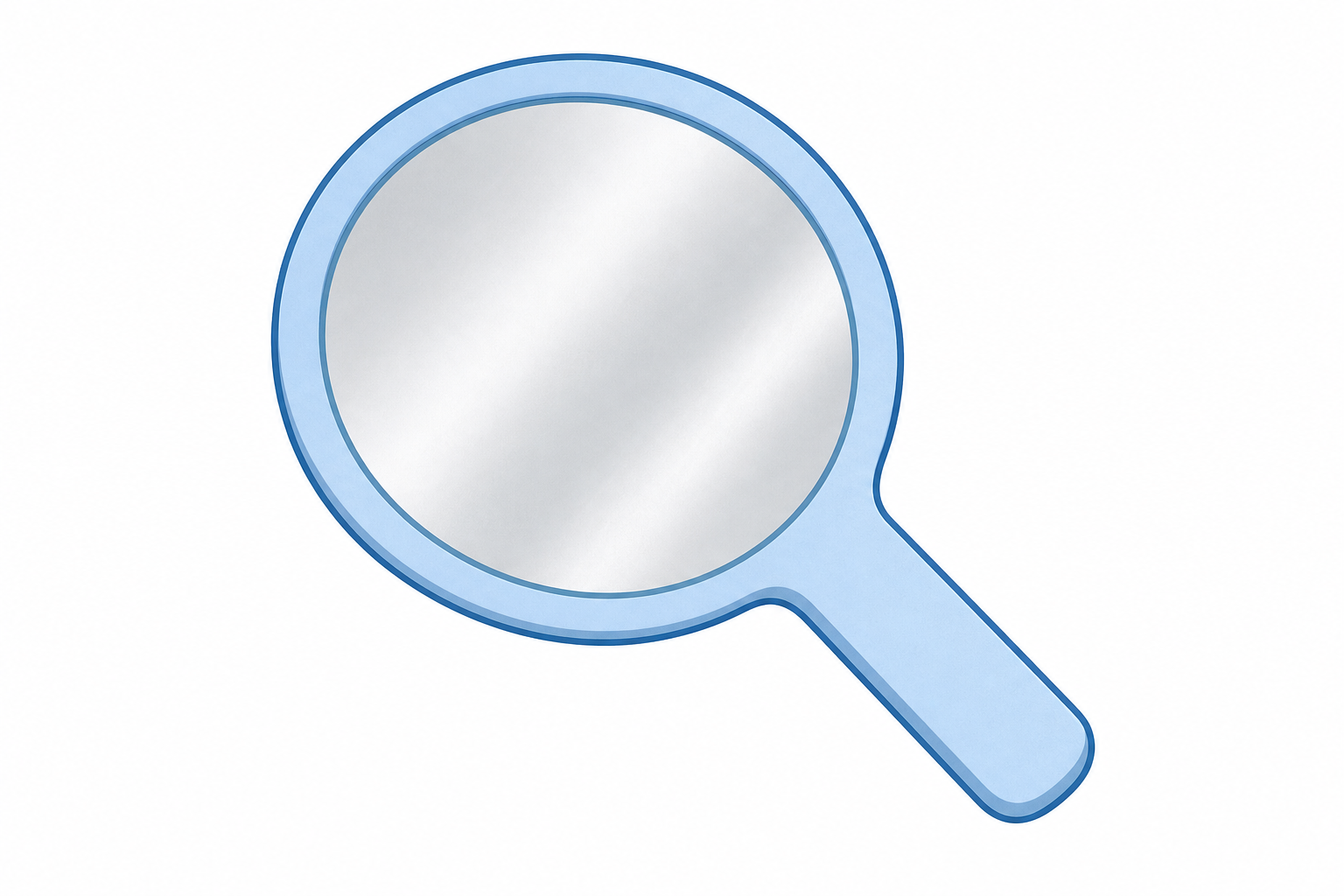
Lead a short whole-class talk. Invite a few children at a time to show the class one thing a body part can do, so everyone watches together (no assigned partners needed). Pass the hand mirror round so children can look at their own face and find their eyes, nose and mouth. Draw out simple jobs: hands hold, legs walk, feet kick, head thinks.
Bring in the 'who helps us?' thread: A doctor knows all these parts and what each one does. That is how a doctor helps us stay well. Keep answers short and concrete.
Now let's draw a picture of YOU! Draw your head, your arms, your hands, your legs and your feet. Colour them in nicely. Can you make your picture look just like you?
Hand out the Investigation Journal page and crayons. Children draw themselves with their body parts and colour them in. As they draw, ask each child to point to and name the parts in their picture.
For children who find drawing tricky, encourage them to draw a simple person with a head, two arms, two legs and feet — names matter more than neatness. Walk round and revoice the parts: Lovely, I can see your head, your arms and your feet!
Look how much we learnt about our amazing bodies today!
Gather the class and revoice the learning orally. Ask a few children to hold up their drawing and name one body part. Finish with the 'who helps us?' thread: Who knows all the parts of our body and helps us stay well? A doctor!
Tiny home noticing task: At home, find one thing you can do with your hands and one thing you can do with your feet.
You're previewing this lesson. Get full access to this lesson and hundreds more — each one ready to teach, with interactive activities, printable resources and pupil progress tracking built in.