Before the lesson: gather the station kit. Touch station: feely-bags each holding one safe object (pine cone, pebble, conker, sponge, feather, shell). Sound station: lidded jars with rice, pasta, paperclips, a little water (each makes a different sound). Smell station: small pots with orange peel, mint, coffee, lavender, covered with foil and a pin-hole.
How the rotation works: there are three stations, so split your class into three groups and start one group at each station. (For a typical class that is about 6–8 children per group; if your class is large, you can run two smaller rounds, or set out a second copy of a station to keep groups small.) Children take their observation sheet and a pencil with them and record one or two science words at each station. Rotate every 5–6 minutes so every group visits all three within the 18 minutes.
Sharing within a station so nobody queues: the touch station has one feely-bag per child, so all can work at once. The sound and smell stations have fewer jars and pots than children in a group, so have children take turns one jar/pot at a time, or work in pairs (one shakes/sniffs and describes, the partner records, then swap). Remind them quietly: while you wait for the jar, think of two words for the one you just heard.
Move between groups asking What does it feel like? What word would a scientist use? What do you think it is? Step 5 is calmer time at seats to finish and tidy the sheet.
Differentiation
- Support: offer a word bank aloud (smooth, rough, bumpy, soft).
- Support: drawing or saying the word aloud counts, children do not have to spell it.
- Extension: ask children to give two describing words before guessing.
Safety
No tasting unless teacher-prepared and allergy-checked. Check the class for nut and food allergies before using any smell pot. Wash hands after the station round.

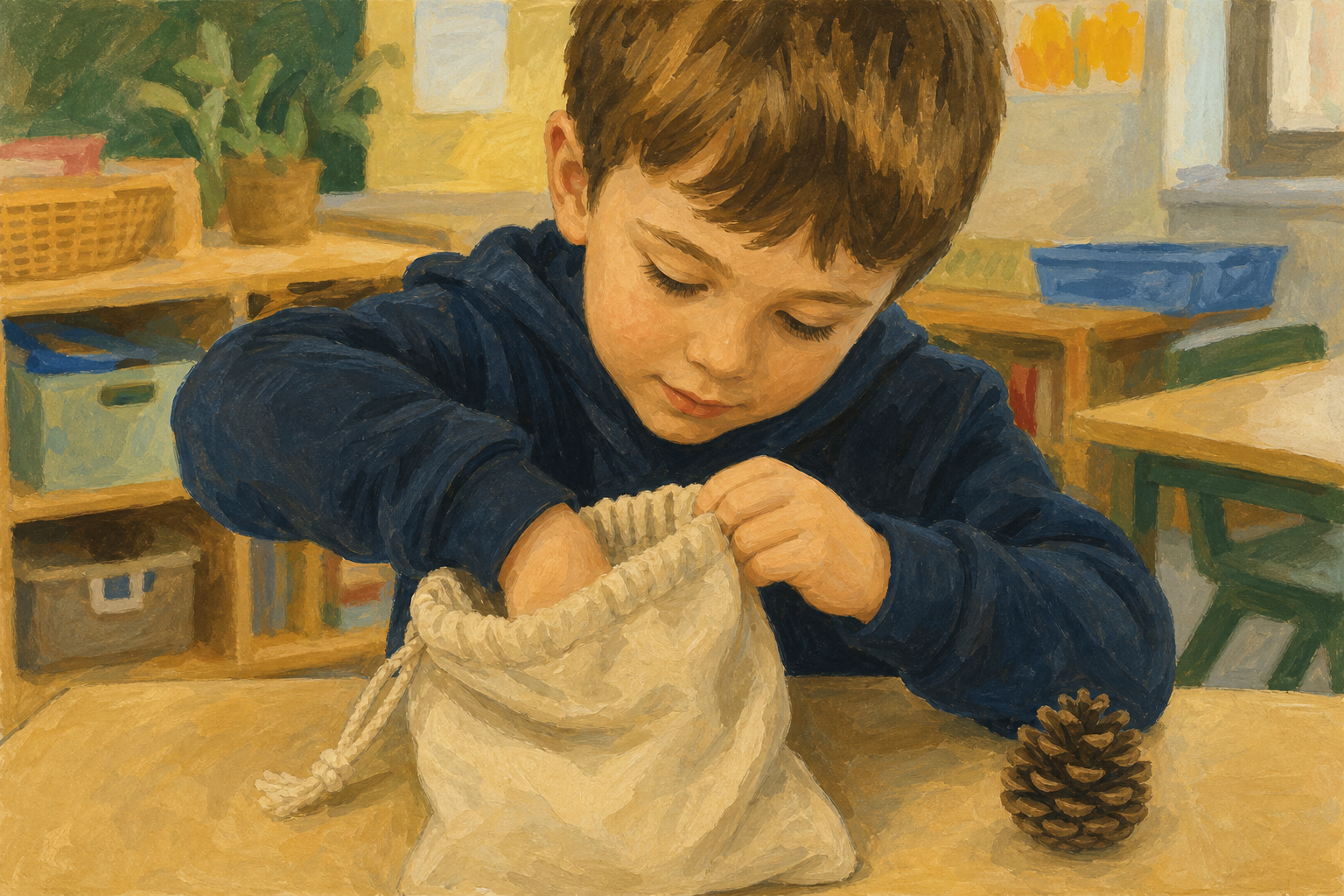 Scientists are very good noticers. They use their eyes, their hands, their ears and their noses to find out about the world.
 Let's watch carefully. The teacher is going to be a senses scientist and use careful science words to describe a mystery object, without looking at it.
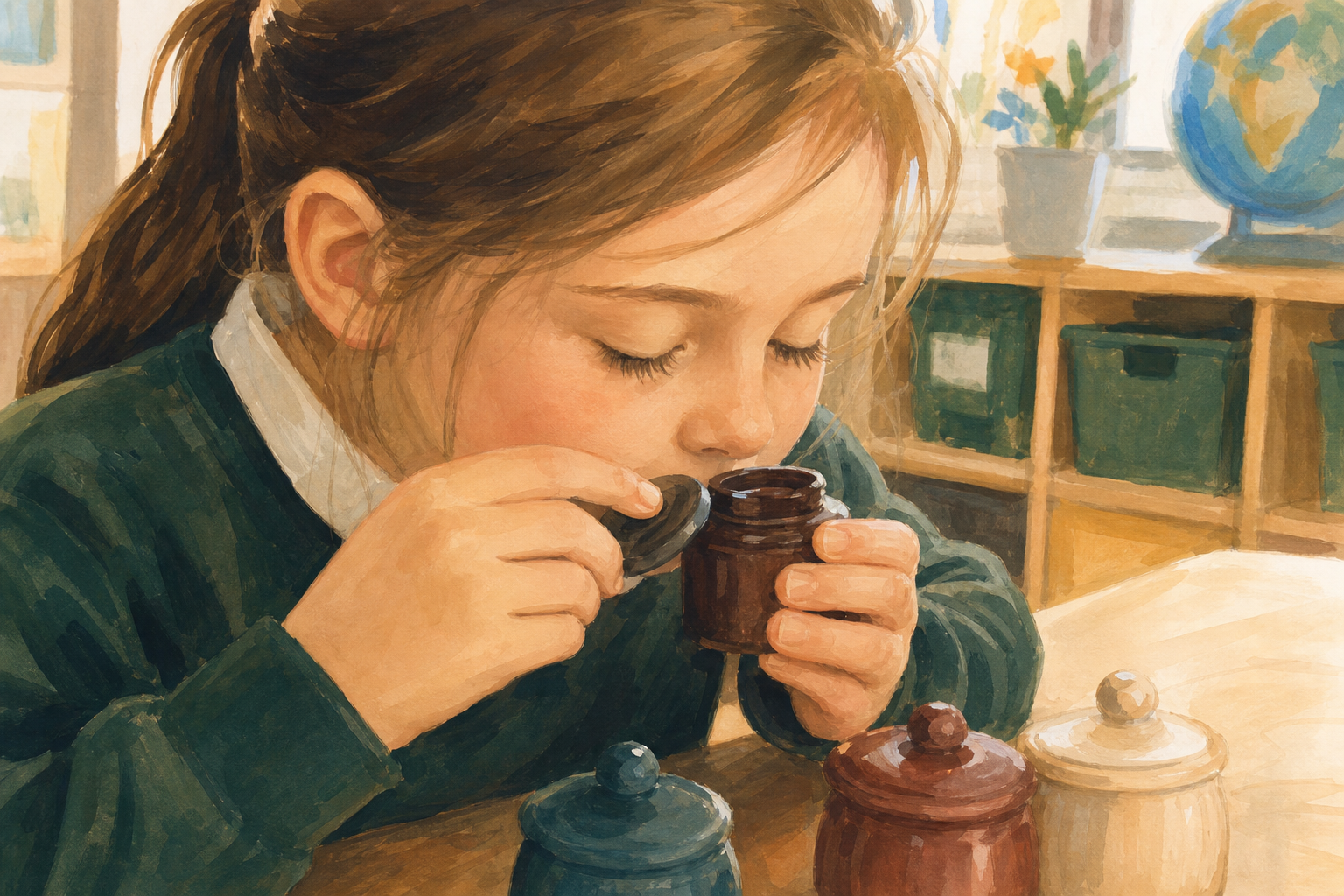 Now it is your turn to be senses scientists! In your group you will visit three stations. Take your observation sheet and a pencil with you.
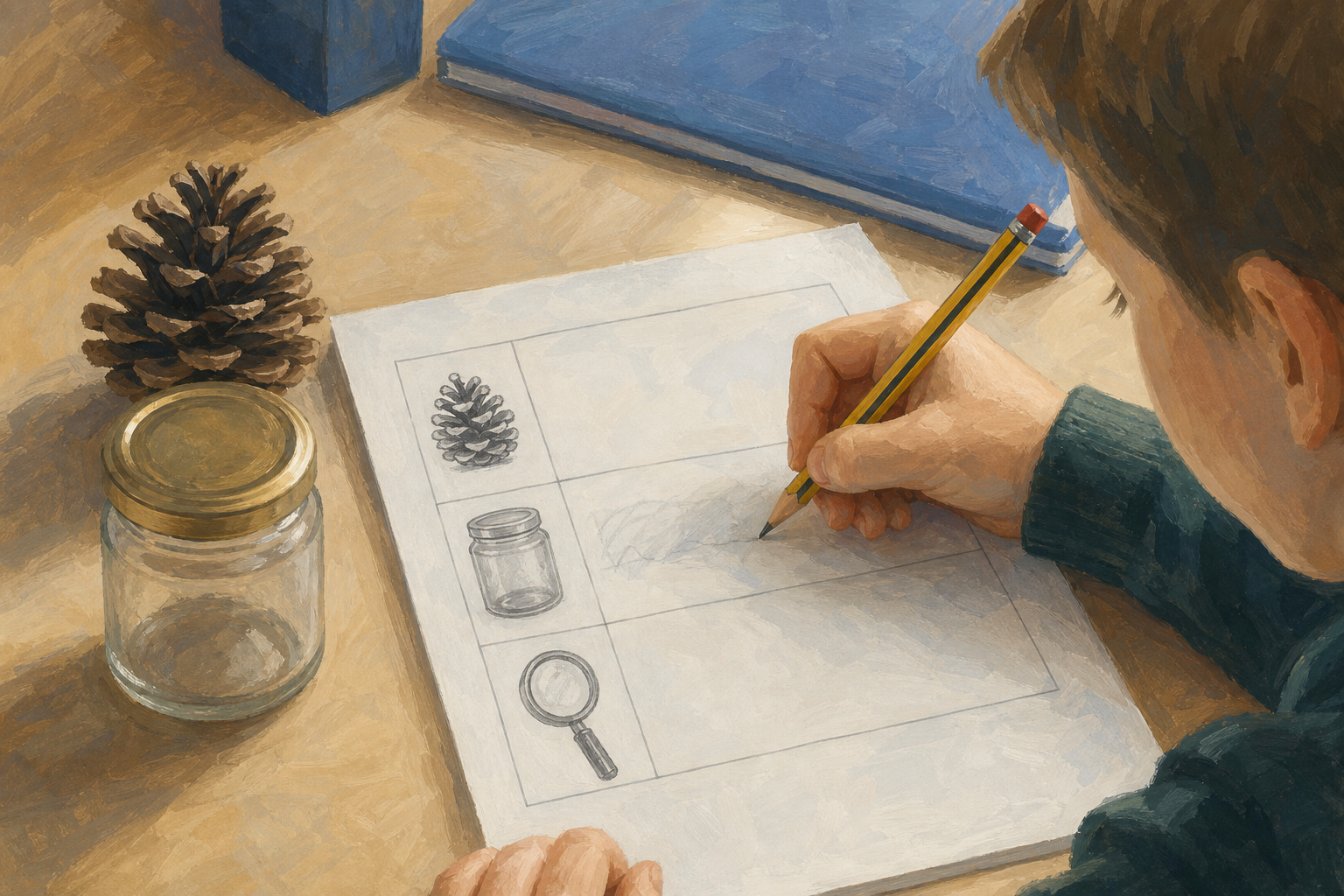 Scientists always write down what they notice. Back at your seat, finish your observation sheet using the words you noticed at the stations.