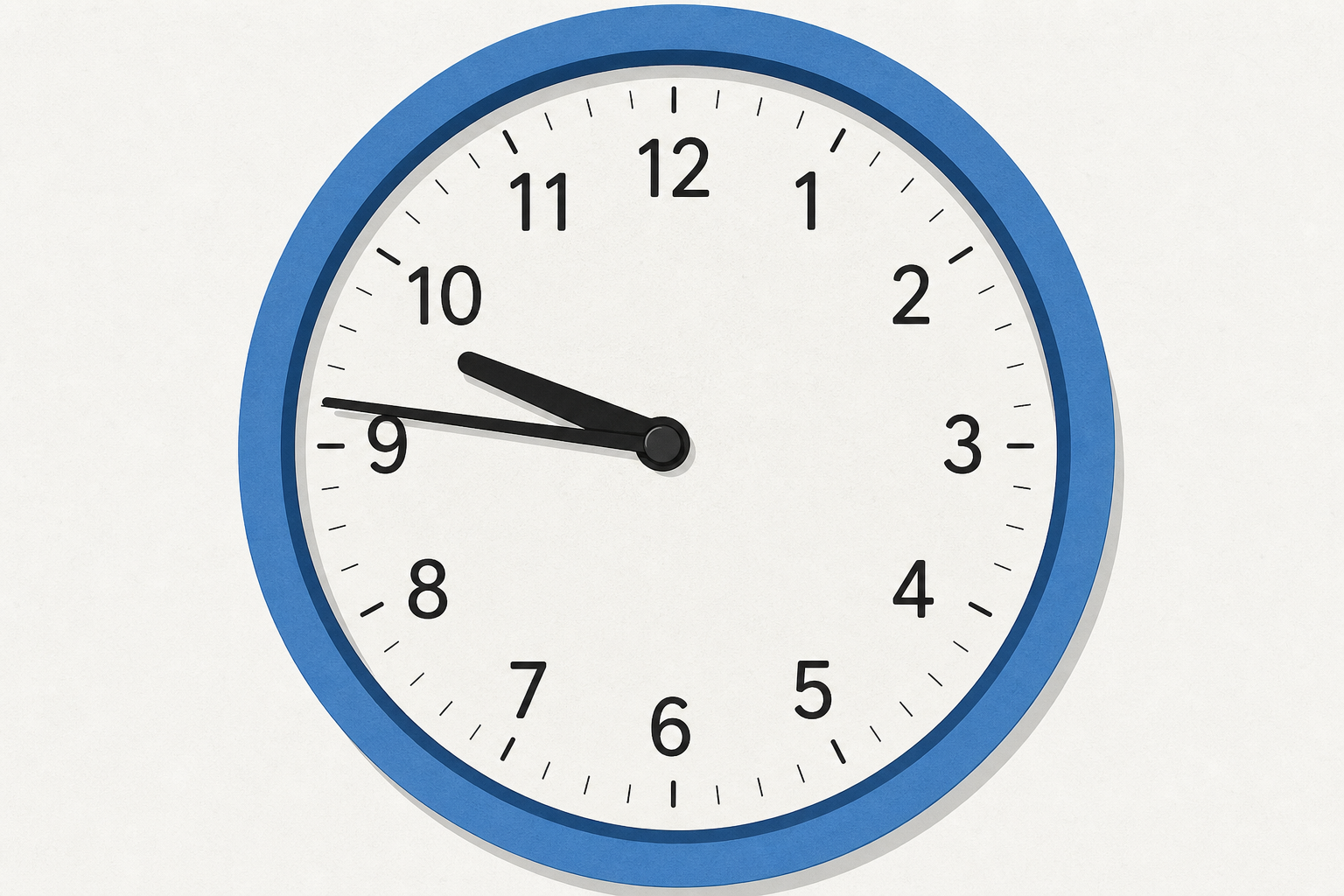
Look at this clock. The long hand is down near the 9, and the short hand is up near the 10. What time do you think it is showing? Look carefully at which hand is which before you decide, because one of them is trying to trick you.
Display the clock at 9:47 as pupils settle. Take three hands-up answers, not open call-outs. Listen for the classic slip — a pupil saying 'ten something' because the short hand is nearly on the 10. Hold that thought; you will return to it in the wrap.
Watch the clock. The long hand points just past the 9, so it is counting forty-something minutes. The short hand is nearly on the 10, but the hour is still 9. We read this as seven minutes before the hour turns: forty-seven minutes past nine.
Now an easier one. The long hand points straight at the 3, which is fifteen minutes. The short hand sits just past the 3. This reads quarter past three.
The long hand points just before the 11, near fifty-three minutes. The short hand is almost touching the 8 — but the hour is still 7. This reads seven fifty-three.
Both hands sit near the top. The long hand has moved just one mark past the 12, so it is one minute. The hour is 12. This reads twelve oh-one.
Walk each clock aloud, one at a time.
Each small mark is one minute; each number is a five-minute jump.
Now we set the hands together. The board shows a target time, and one pupil comes up to drag the hands to match it while the rest of us check their work. Before each pupil presses on, look at the short hand and predict the hour out loud, then check the long hand is on the exact minute. We will set these three times in turn:
This round is for talking it through together — pupils take turns at the board and the class agrees or corrects out loud.
For each of the three target times shown on the board, send one pupil up to drag the hands. Use the whole-class pacing lever: before the pupil settles the hands, ask the class to predict the hour from the short hand, then check the long hand for the exact minute. Watch for pupils nudging the short hand all the way onto the next number when the minute is large — revoice 'so when it is fifty minutes past, the short hand is nearly at the next number but the hour has not changed yet'. Rotate three pupils across the three times.
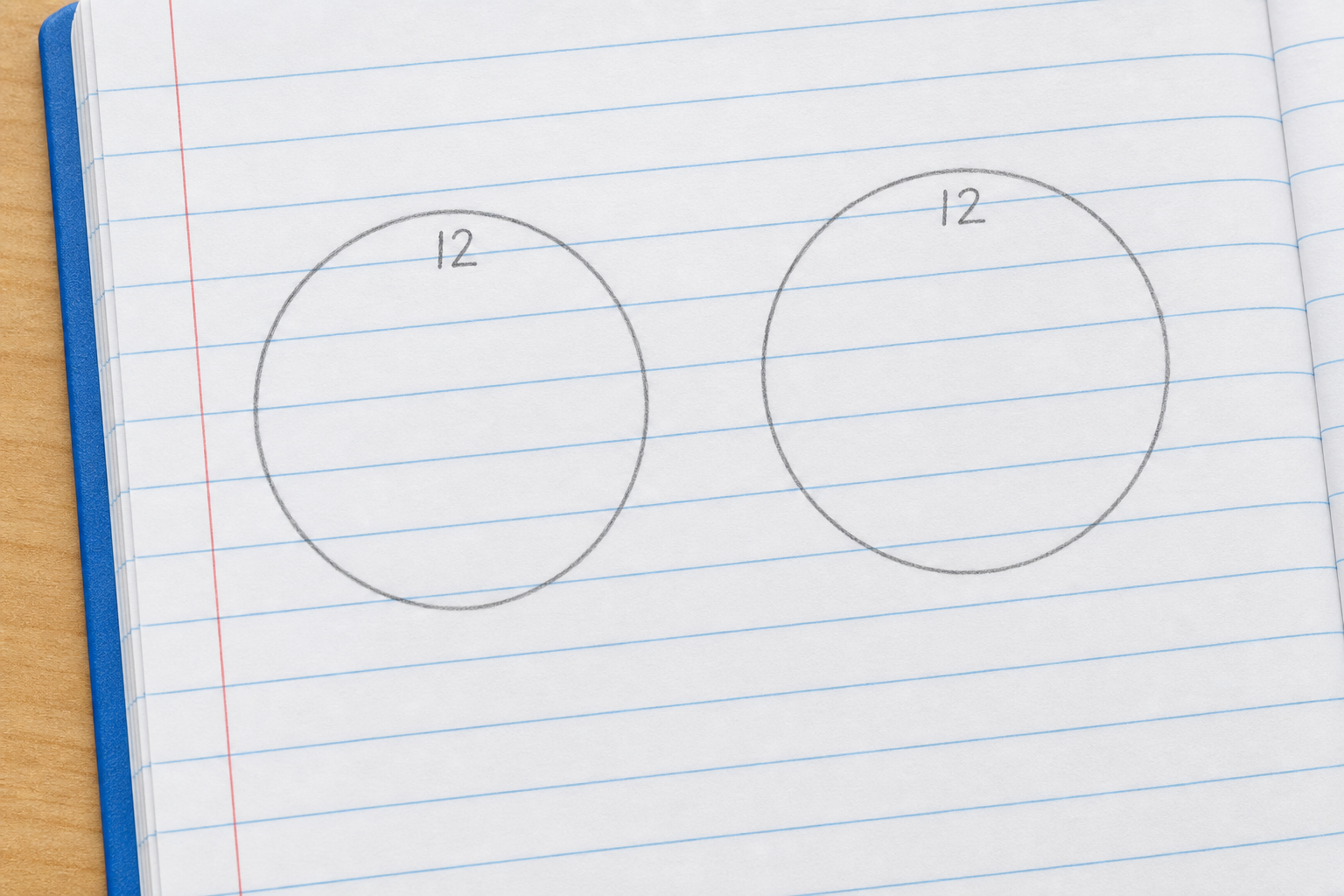
In your maths copy, sketch two clock faces as simple circles with 12 at the top. Mark the hour and minute hands for each of these times, and write the time in digits underneath each clock.
Walk the room and glance at the hand lengths — the short hand should be clearly shorter than the long hand. The 7:53 is the trickier one: check the short hand is near the 8 but not on it. No marking, this is whole-class copybook practice.
Now we set the hands to match each target time. We will work up from easy times to the really tricky ones where the hour hand tries to fool us.
Read the short hand for the hour first, then the long hand for the minute.
This round is the practice bank — pupils take turns at the board, check each answer, and the class confirms before moving on. Keep the board work brisk rather than over-explaining.
The early targets (2:30, 6:10) let everyone in. The later ones (10:47, 8:53) are the make-or-break — the minute is large so the short hand crawls toward the next number. Before each pupil presses Check, ask the class to predict the hour from the short hand. On the final 11:28, draw out the observation: ask the class where the short hand sits between the 11 and 12. It is past the 11 and nearly halfway to the 12 (28 minutes is just under half an hour), so the hour is still 11 — a good stretch to talk through.
When does the short hand try to fool us? Think about the times where it sat nearly on the next number but the hour had not changed yet. How did you know which hour was the right one?
Listen for pupils naming the large-minute case as the trap — when it is fifty-something minutes past, the short hand is almost at the next number. Revoice a strong answer: 'so the hour hand only counts as the next hour once it actually reaches that number — until then we keep the hour it has just passed'. Link back to the 9:47 from Getting Started if the early slip came up.
Next we look at 24-hour time, where the hours keep counting up after midday — so 2 pm becomes 14:00.
Keep this brisk. Restate the one big idea: read the short hand for the hour, the long hand for the minute, and do not let a crawling short hand trick you into the wrong hour.
You're previewing this lesson. Get full access to this lesson and hundreds more — each one ready to teach, with interactive activities, printable resources and pupil progress tracking built in.