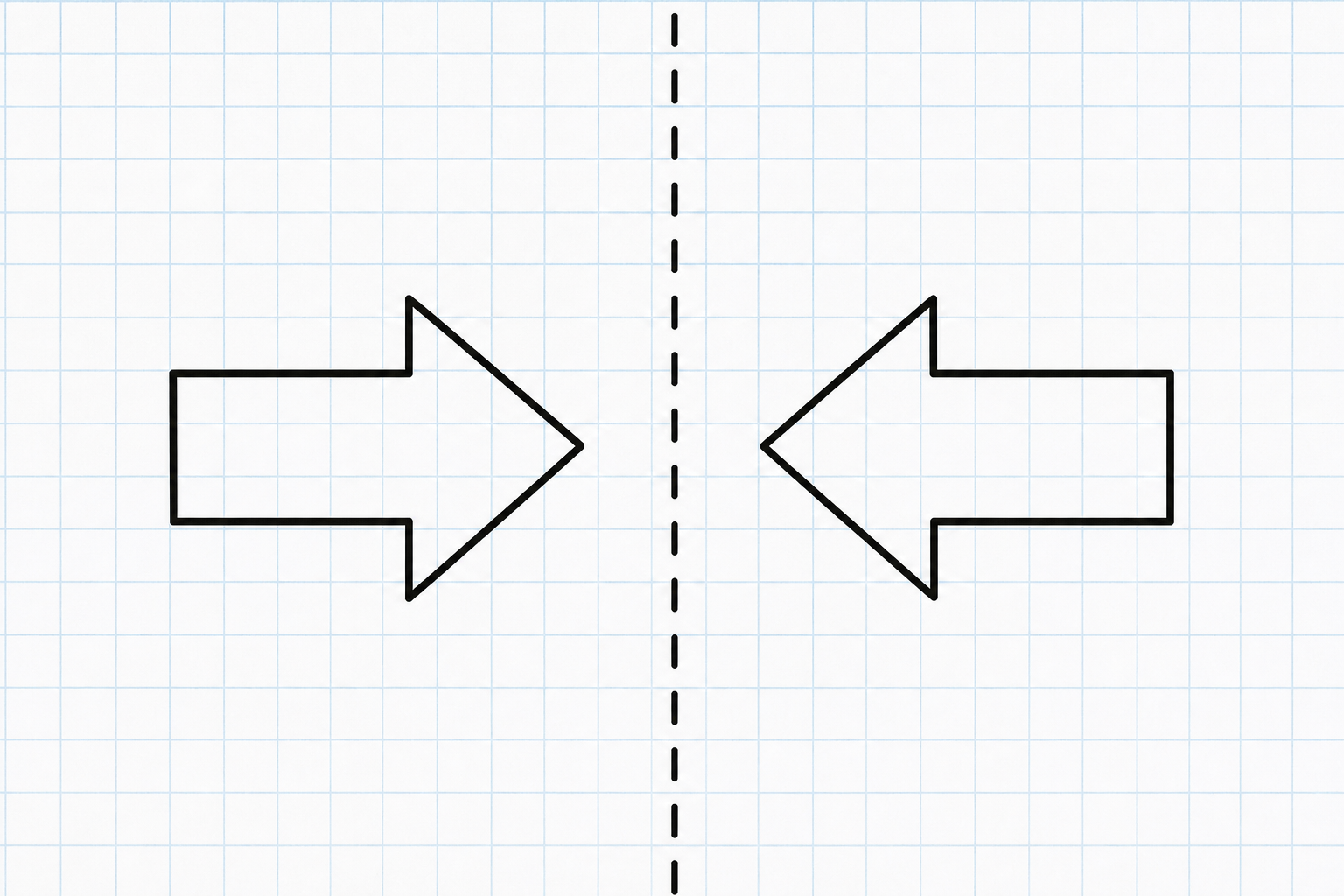
Look at this picture of a pattern-block triangle standing beside a mirror. The triangle points to the right. Its reflection sits in the mirror.
Which way is the reflection pointing? The same way as the triangle, or the opposite way? Have a good look before any hands go up.
Give five seconds of quiet think-time, then take two or three hands-up answers. Listen for pupils noticing the reflection points the opposite way. Revoice: so the mirror flips it round to face the other side.
Watch as we reflect a triangle across the mirror line, the line we flip across, that goes straight up and down. The triangle pointed one way; now it points the other way. It is still the same size, just flipped.
Now the same triangle reflects across a mirror line that lies flat, side to side. This time the flip is top-to-bottom.
Look at this L-shape. When it reflects, the foot of the L swaps to the other side. Let us check one corner together: this corner sits 2 squares to the left of the mirror line, so its reflection must land 2 squares to the right of the line. Count the squares from the line to a corner, then count the same number of squares on the other side to find where the reflection goes.
This time the mirror line runs on a slant, corner to corner. The flip still works the same way: each corner ends up the same distance from the line, but we count the squares along the slant rather than straight across. Watch how the triangle tips over the diagonal line to land on the other side.
Walk each example aloud, one at a time.
Today we explore reflections on the board. We build a small shape on one side of the mirror line, and the tool flips it across to the other side. Watch where each flipped corner lands.
We will try a triangle across a line, then an L-shape, checking each time that every corner is the same distance from the line.
This round is for talking it through together — pupils take turns at the board and the class agrees or corrects out loud.
Invite an individual pupil to tap cells to build a small shape on one side of the chosen mirror line; the tool auto-mirrors each tap across the line. Before confirming each flip, do a quick turn-and-name: name a pupil to say how many squares one corner sits from the line, then name another to say where its reflection should land. Ask the class to check: is the flipped corner the same number of squares from the line? Rotate three or four pupils, revoicing a clear answer each time. Watch for pupils expecting the shape to slide rather than flip — pause and revoice when the reflection faces the opposite way.
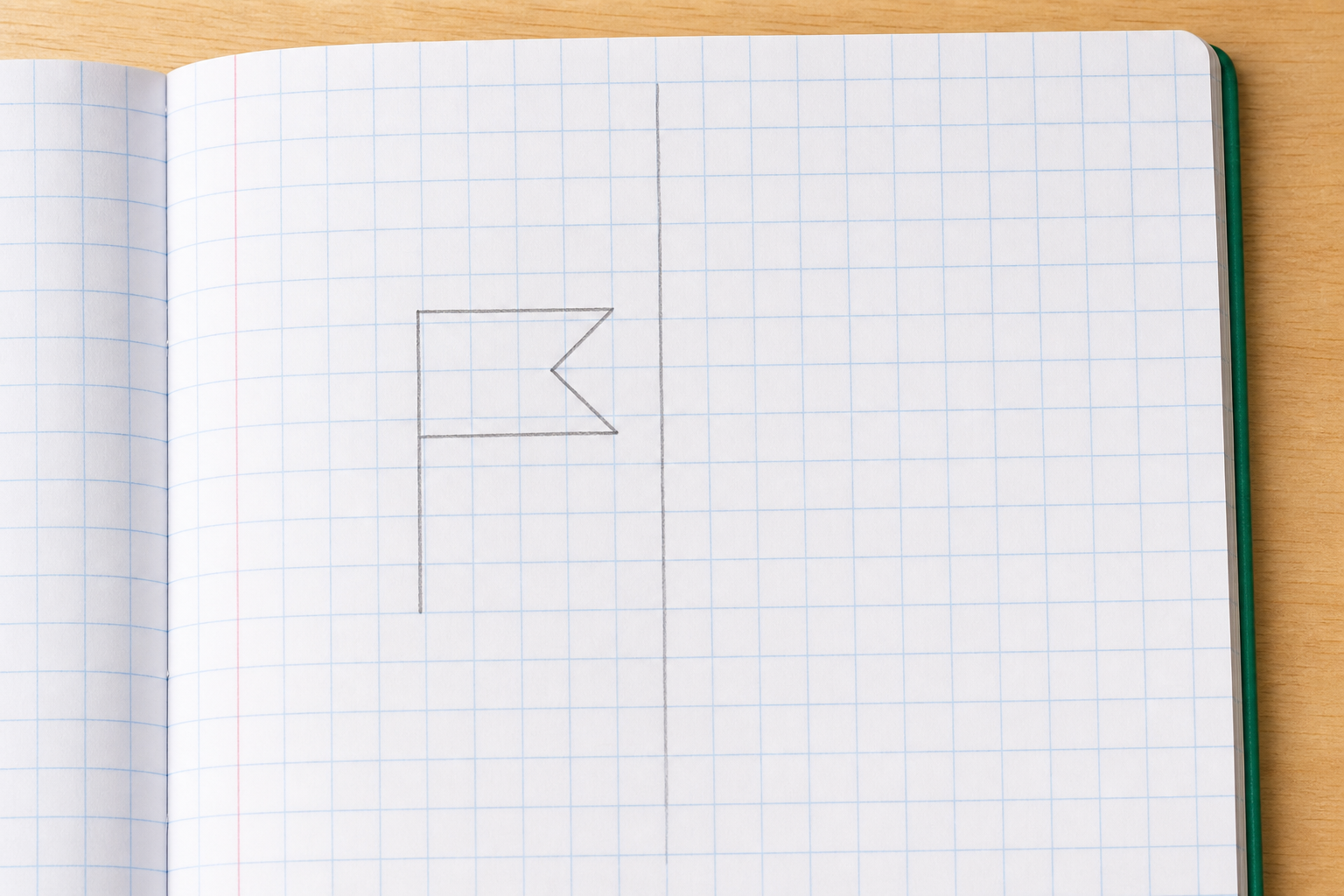
In your maths copy on squared paper, draw a vertical mirror line. On the left of the line, draw a flag shape. Then carefully draw its reflection on the right.
Check each corner: count how many squares the corner is from the line, then count the same number on the other side. Every corner must be the same distance from the line.
Walk the room glancing at the corner counts and that the reflection faces the opposite way — this is whole-class copybook practice, not marking.
Today we work through these reflections together. Remember: a reflection flips the shape; it is never just slid along.
If we have time, there is an optional stretch: reflect an L across a diagonal line, just like we saw earlier.
This round is the practice bank — pupils take turns at the board, check each answer, and the class confirms before moving on. Keep the board work brisk rather than over-explaining.
Narrate the which way does it flip? question each time. The diagonal-line reflection at the end is an optional stretch — lead it explicitly with the class, marking the slant line and checking one corner's distance aloud together, and only run it if time allows. Watch for the slide-not-flip slip on the arrow shape: if the arrow still points the same way, it has been moved, not reflected.
You're previewing this lesson. Get full access to this lesson and hundreds more — each one ready to teach, with interactive activities, printable resources and pupil progress tracking built in.