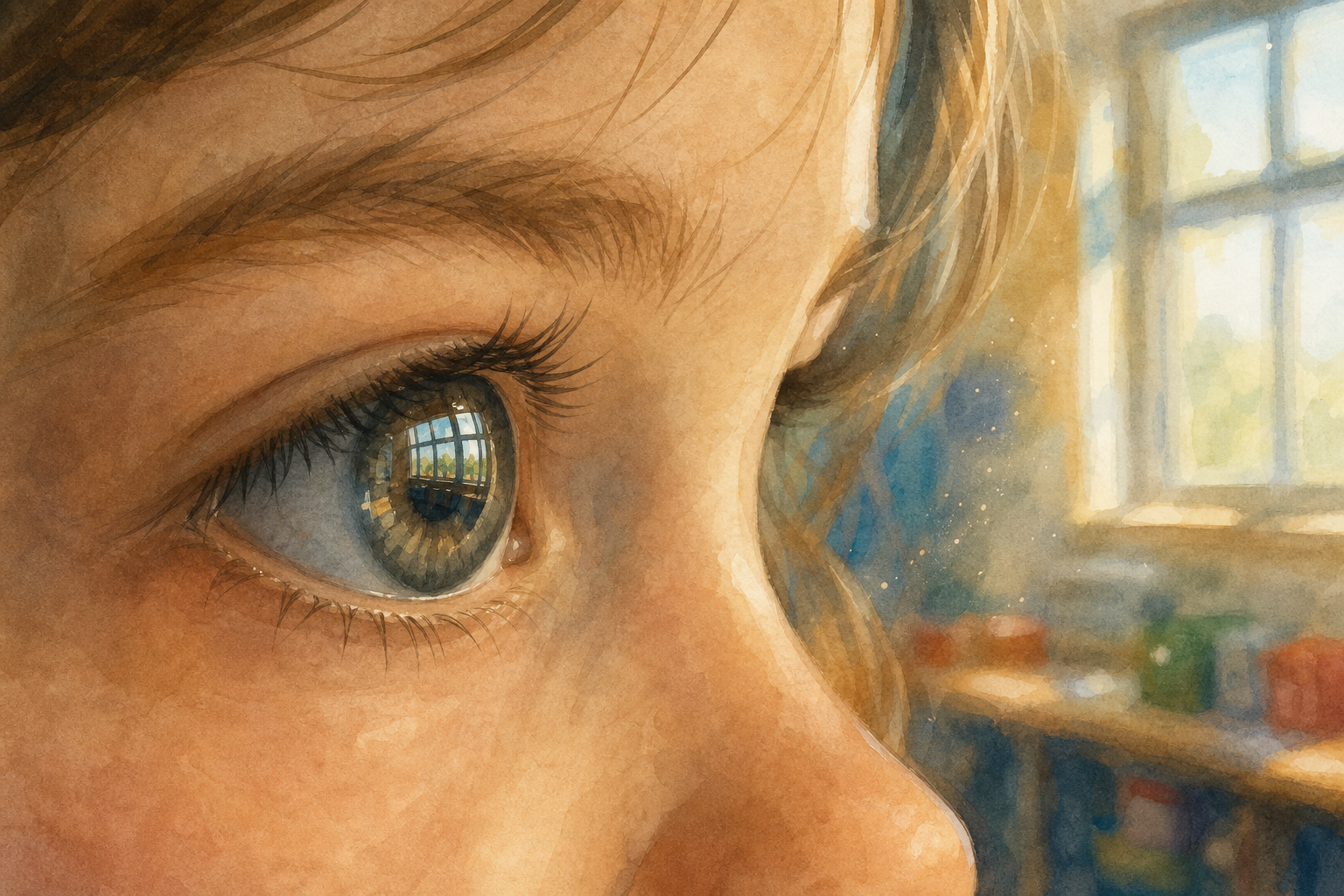
Welcome to a whole year of being a scientist, a maker and a wonderer! Today we are going to learn a special way of looking at the world. We call it putting on our STEM eyes. When you put on your STEM eyes, you stop and look closely at things, and you wonder how they work and what they do. Look around our room right now. What is something you notice? Hands up and tell me one thing you can see, hear or feel.
Keep this light and curious. Take three or four quick offerings, accepting anything they call out. Today we are putting on our STEM eyes. Don't define STEM yet, that comes in the next step. The goal is just to spark the urge to look around.
STEM eyes are not real glasses. They are a way of paying close attention. People who use their STEM eyes ask three little questions: What do I notice? What does it do? How could I find out more? When you do this, you are thinking like a scientist and a maker. Here are the ideas we will use today.
This table is the teacher's reference. Read each row aloud and point at a real thing in the room as you give the example (point at the clock for 'wondering', a leaf or a real object for 'noticing'). Keep the language playful.
| Concept | Why it matters | Example |
|---|---|---|
| STEM eyes — looking closely at the world and wondering how things work and what they do | It turns an ordinary day into a treasure hunt of interesting things to find out about | Stopping at the classroom door to wonder how the handle makes the door open |
| Noticing — stopping to look, listen and pay close attention to something | Scientists find out new things by noticing what other people walk straight past | Spotting the tiny lines running through a leaf when you look closely |
| Wondering — asking a question in your head about something you notice | Every science discovery started with someone wondering 'why?' or 'how?' | Wondering why the classroom clock keeps ticking all day |
Watch closely. I am going to use my STEM eyes on one ordinary thing, and I will say my thinking out loud. Listen for my two questions: 'What do I notice?' and 'What does it do?'
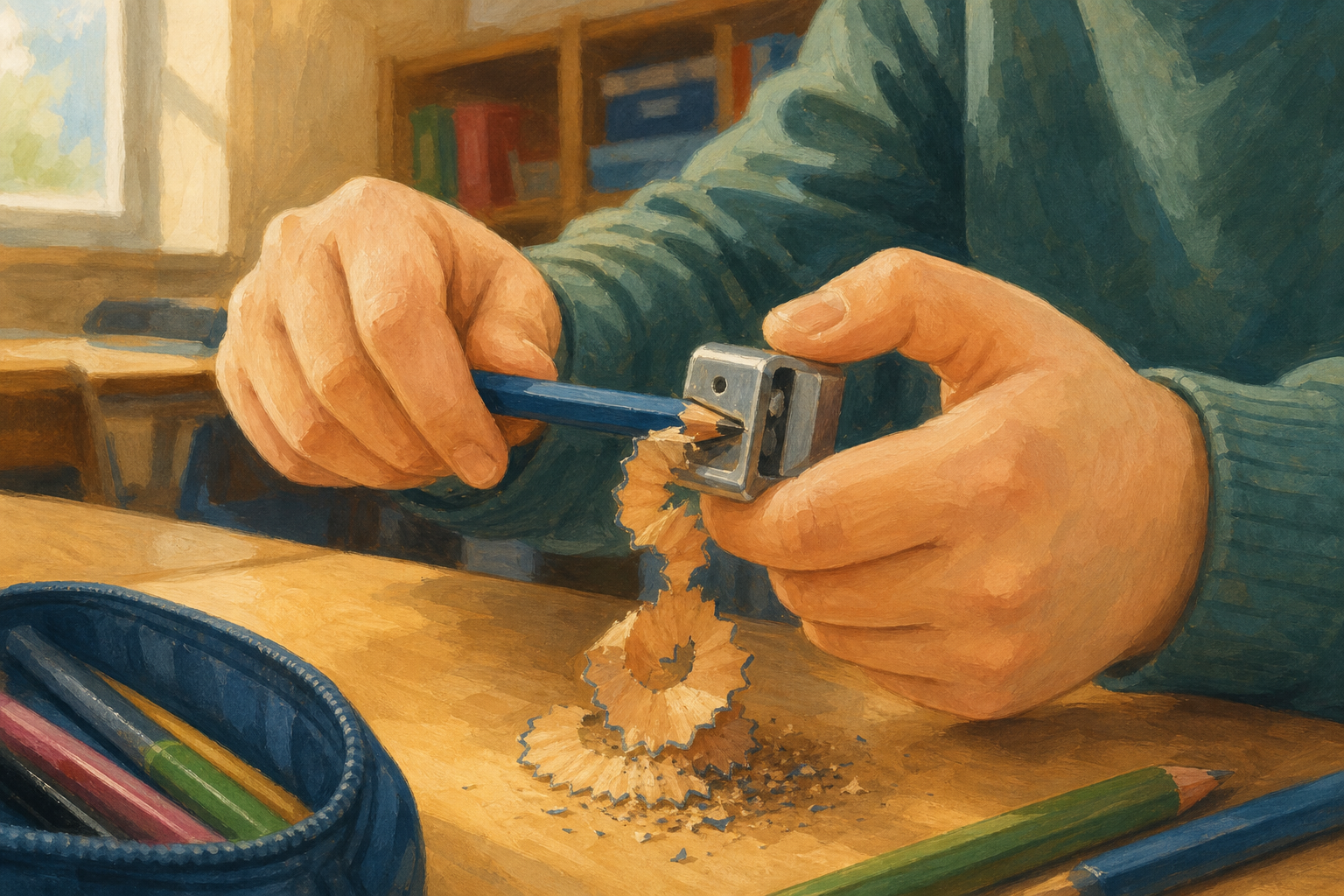
Pick up one real everyday object (a pencil sharpener, a stapler, a tap if near a sink) and model the full noticing cycle out loud so the children hear every beat before they try it. Say each line clearly:
This modelling is the worked example — every child needs to hear all three questions answered before the walk, or they will only point and not wonder. Then say: Now it is your turn to use your STEM eyes outside our room.
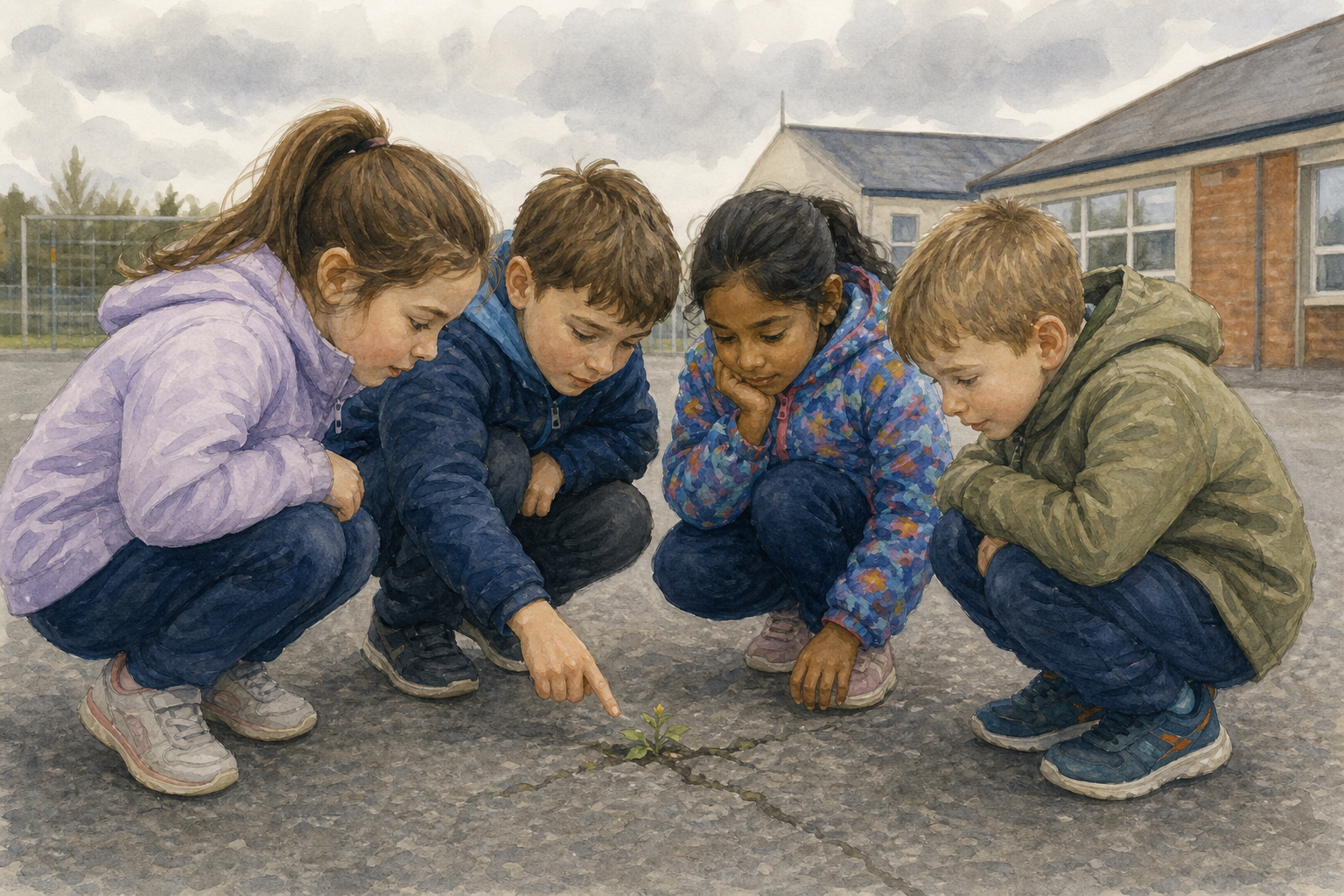
Now we go on a noticing walk! We will walk slowly around our classroom, then out to the yard and play area. We will stop at things and use our STEM eyes. At each stop, two questions: What do you notice? and What does it do? Point at it, say what you notice, and tell a friend what you think it does.
We do not pick anything up or run ahead. We walk slowly and look closely, like real scientists.
Take the class on a slow guided walk: a few stops inside the room, then out to the yard and play area. Stop the group at five or six interesting things (a window catch, a drainpipe, a bench, a plant growing in a crack, a tap, the play equipment). At each stop ask What do you notice? What does it do? and let two or three children answer.
Differentiation: pair a confident noticer with a quieter child; give a sentence stem 'I notice… It does…' for those who need it. Stay with the whole class outdoors; no picking or tasting anything.
Back in our circle, let's share. Tell us one thing you noticed on our walk and what you think it does. Did anything surprise you? Did you wonder anything?
Every notice is a good notice!
Sit the class in a circle. Use think-pair-share first: tell the person beside you one thing you noticed and what it does. Then take six or seven offerings to the whole group, revoicing each as a STEM-eyes moment: So Aoife noticed the drainpipe, and she thinks it carries the rain away — great wondering! Draw out the words notice, wonder and does. This is a display-only science-talk beat; nothing is written here.
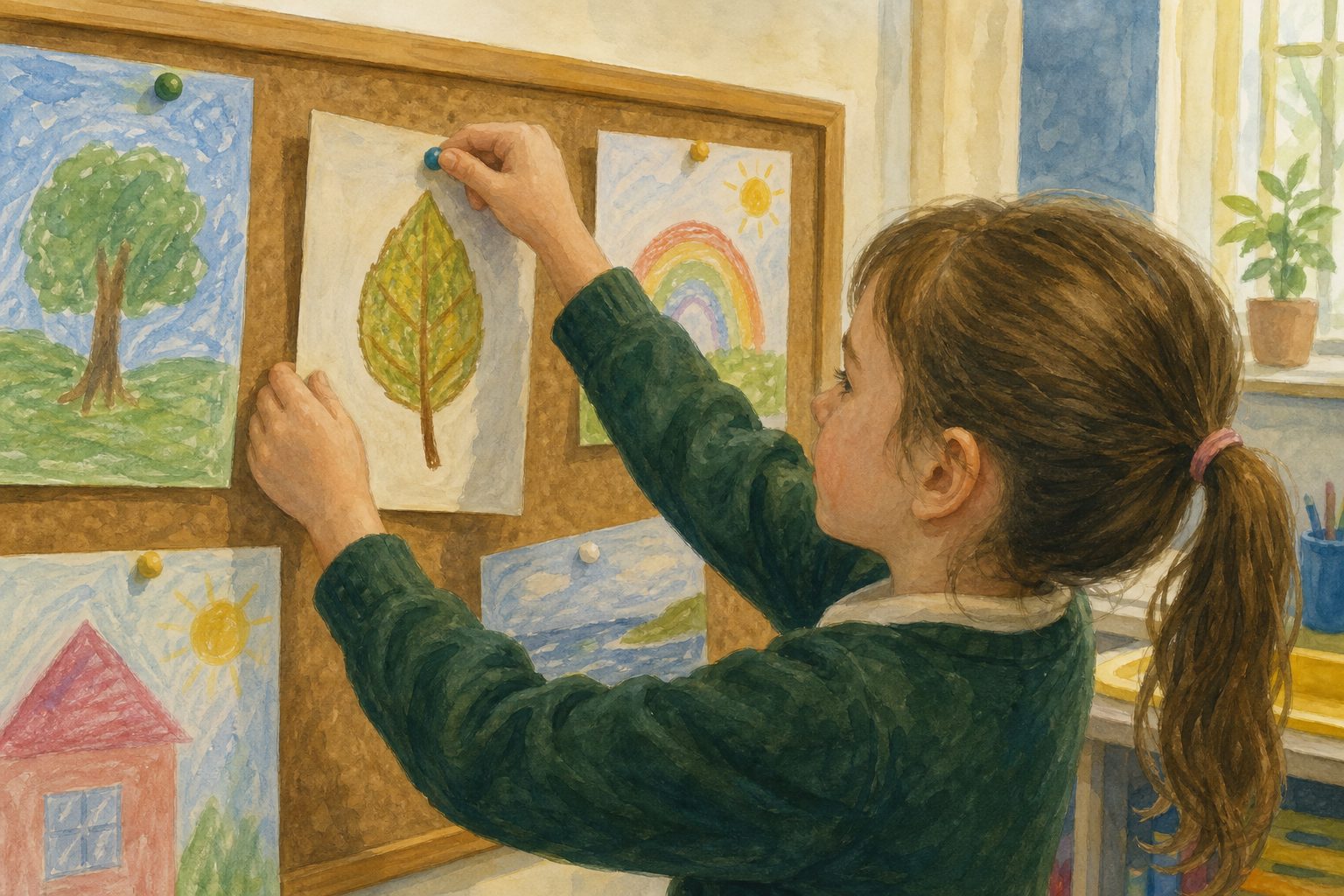
We are going to start a special wall that lasts all year. It is our 'I wonder' wall. On your paper, draw one thing you noticed today that you would like to find out more about. Make it big and clear. We will pin every drawing up on our wall, and your drawings together will BE our 'I wonder' wall. Whenever we wonder about something new this year, it can go up too.
Hand out paper or use the Investigation Journal drawing page. Each child draws one thing they noticed and wondered about. As they finish, pin the drawings onto an existing noticeboard or wall space (or the IWB display area) — that pinned collection of drawings is the 'I wonder' wall; do not prepare a separate big sheet. This is the drawing record beat — the drawing is the reflection. Keep the wall up all year and add to it as new wonders arise.
Today we put on our STEM eyes for the very first time. We learned to stop, notice, and wonder about ordinary things, and to ask 'what does it do?' Think about this: which thing you noticed today do you most want to find out more about?
You can use your STEM eyes everywhere, at home, in the car, in the garden. Keep noticing!
Close the lesson on the wall the class just made. Point to two or three drawings and name the wonder. Homework (oral, recorded as a drawing if you wish): ask children to use their STEM eyes at home and find one interesting thing to tell the class about — what they noticed and what it does. Keep this a verbal, display-only reflection; nothing is typed or saved.
You're previewing this lesson. Get full access to this lesson and hundreds more — each one ready to teach, with interactive activities, printable resources and pupil progress tracking built in.