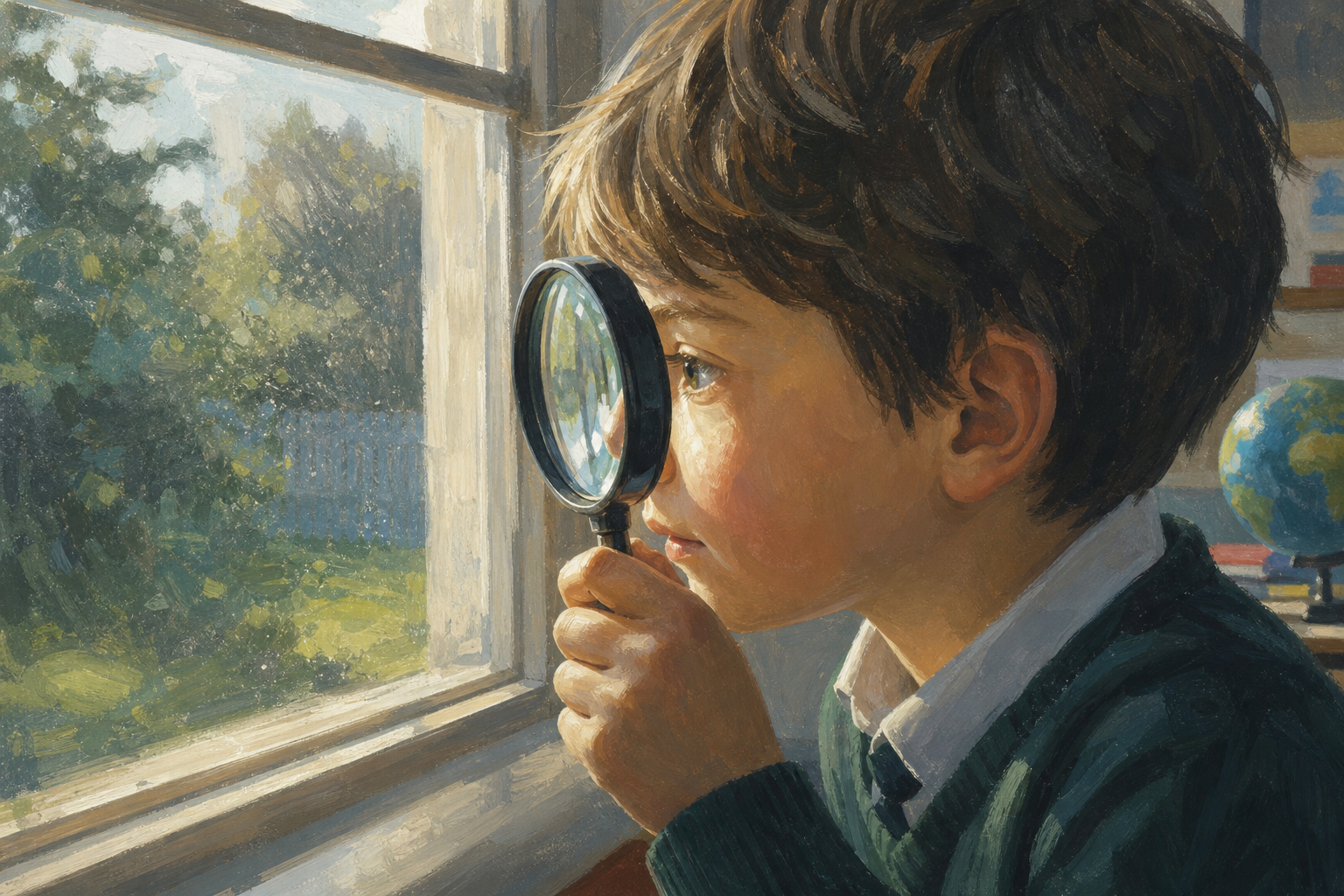
Look around our room right now. What do you notice? Maybe a light, a clock, a window, a plant on the shelf. Hands up: what is one thing in this room you have a little wonder about? Today we are going to put on our 'STEM eyes' and become noticers, because that is how every scientist, engineer and inventor starts.
Keep this light and quick. Get the children looking and answering straight away, then land the one-line idea that noticing is how science starts. Take two or three wonders from the class, no more. Don't answer them yet, just say 'good wondering, let's hold onto that'. You don't need any props beyond pointing around the room.
When we use our STEM eyes, we do three things. First we notice something. Then we ask what does it do? Then we wonder how could we find out? Let's meet them one at a time.
Notice means we look closely and see a thing, like the classroom door swinging shut all by itself.
What does it do? means we name its job. A tap lets out water. The yard fence keeps us safe.
How could we find out? means we turn our wonder into a question, like 'does the puddle dry faster in the sun?' A good question often starts with words like does, which, how or what happens if.
Reveal one idea at a time. This is a static content step (nothing on screen moves). Read the first short paragraph aloud and point at a real thing in the room that swings or moves, before moving to the next. Then read the 'what does it do?' paragraph and point at a real tap or the fence out the window. Then read the 'how could we find out?' paragraph slowly. Pausing on each one keeps the slow readers with you, because there is never more than one new idea on screen to take in.
For your own delivery, here is the table of the three steps with why each matters:
| STEM eyes step | Why it matters | Example |
|---|---|---|
| Notice — look closely and see a thing | Noticing is how every scientist, engineer and inventor begins | The classroom door swinging shut by itself |
| What does it do? — name its job | Everything around us has a job; spotting the job helps us understand it | A tap lets out water; the yard fence keeps us safe |
| How could we find out? — turn the wonder into a question | A good question is the start of finding out instead of just guessing | 'Does the puddle dry faster in the sun?' |
The key idea to land: a wonder becomes a question when it starts with words like does, which, how or what happens if. You will model turning a wonder into a question in the next step.
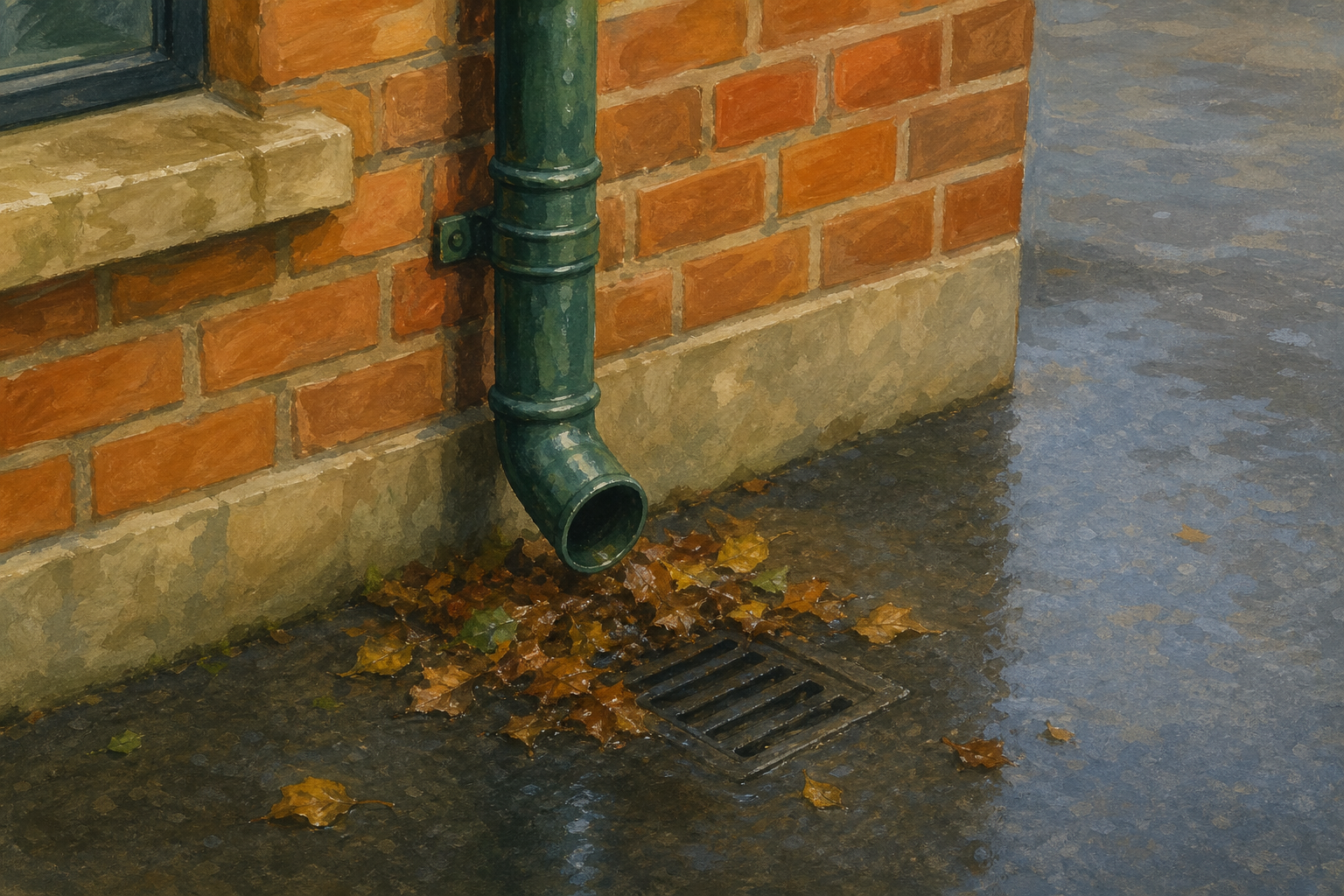
Watch me use my STEM eyes on one thing before you try it yourselves. I am going to look at the drainpipe outside our window.
First I notice it: I see a long pipe going down the wall to the ground. Then I ask what does it do? I think it carries rainwater from the roof down to the ground so the roof does not get too heavy and wet. Then I wonder: I wonder where all that water goes after it reaches the bottom. And I turn my wonder into a question we could find out: 'Where does the rain from the roof end up?'
This is the worked example. Model the full cycle out loud so the children hear every beat: I notice... what does it do... I wonder... my question is.... Pick any real feature you can point to (a drainpipe, a door hinge, a light, a tree). Say the question slowly and notice aloud that it begins with a question word. This is exactly the pattern they will follow on the walk.
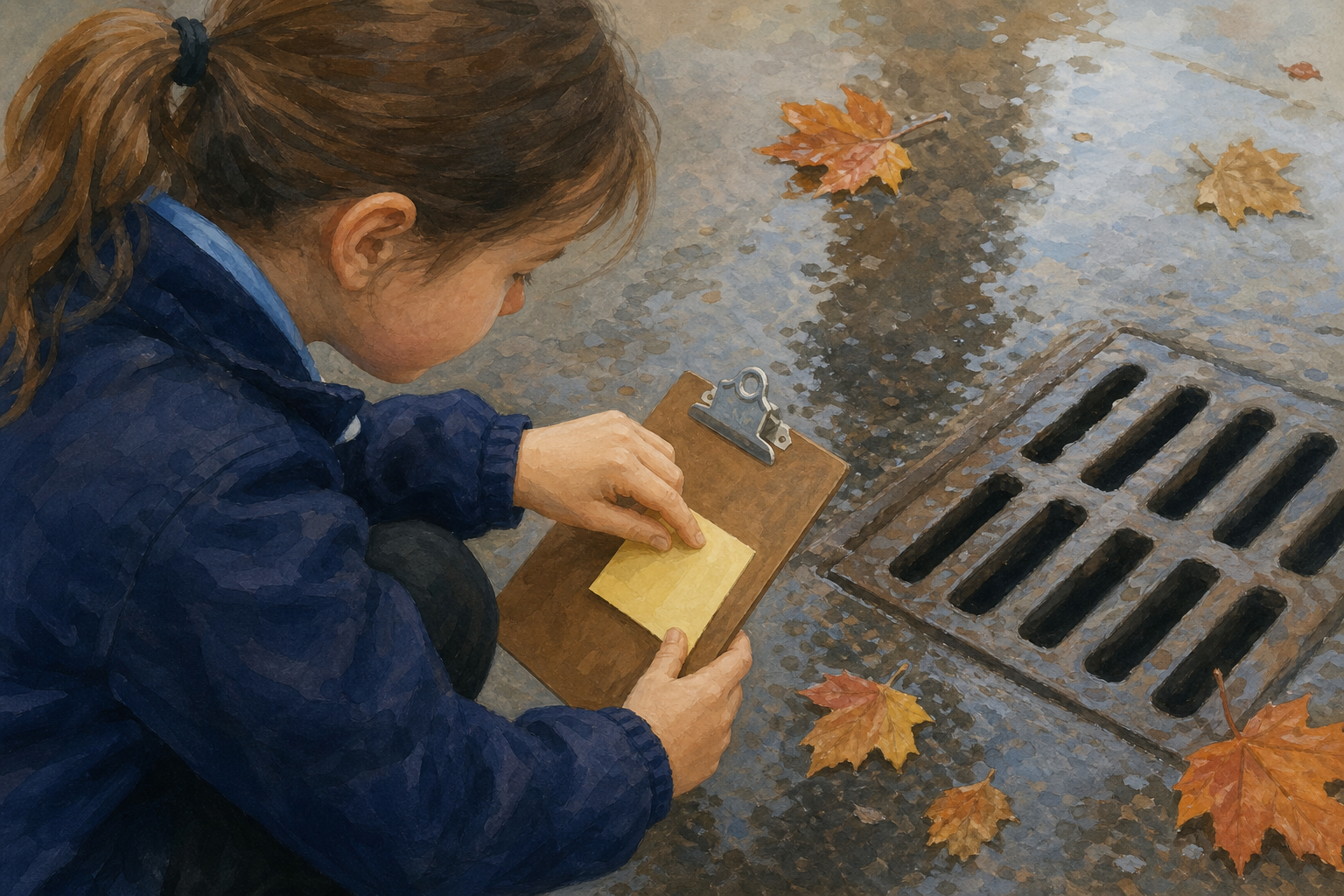
Now it is your turn to be noticers. Find the partner I name for you, and one of you will carry the clipboard. We will walk quietly through our school and grounds. Stop at things that catch your eye: a tap, a gate, a tree, a bin, a window, a puddle. For one or two things you choose, write or draw on a sticky note: what you noticed and what it does. When you find your favourite wonder, draw a little star on that sticky note so you can find it again back at your seat.
Pair the children before you set off. Read out partner pairs (or use your usual talk-partners) and tell each pair who is carrying the clipboard for the first half, swapping later. Doing this in the room, before the door, saves a scramble outside.
Before the walk: push back to a tidy line, hand out clipboards and a few sticky notes per pair. Plan a very short route that you have pre-walked so the transitions out and back don't eat the time. With 7-8 year olds, getting out and back is the slow part, so keep the loop tight (just outside the classroom door and one stop in the yard is plenty).
Children who find writing tricky can draw the thing and tell you what it does. Stretch confident pairs to find something that is hard to explain.
This 14-minute window must cover the line-up, the walk out, the noticing, and the walk back — not noticing alone. Keep the route tight so real noticing time isn't squeezed: roughly 4 minutes to line up and travel out and back, leaving about 10 minutes at the stops. Settle back in the room ready to share.
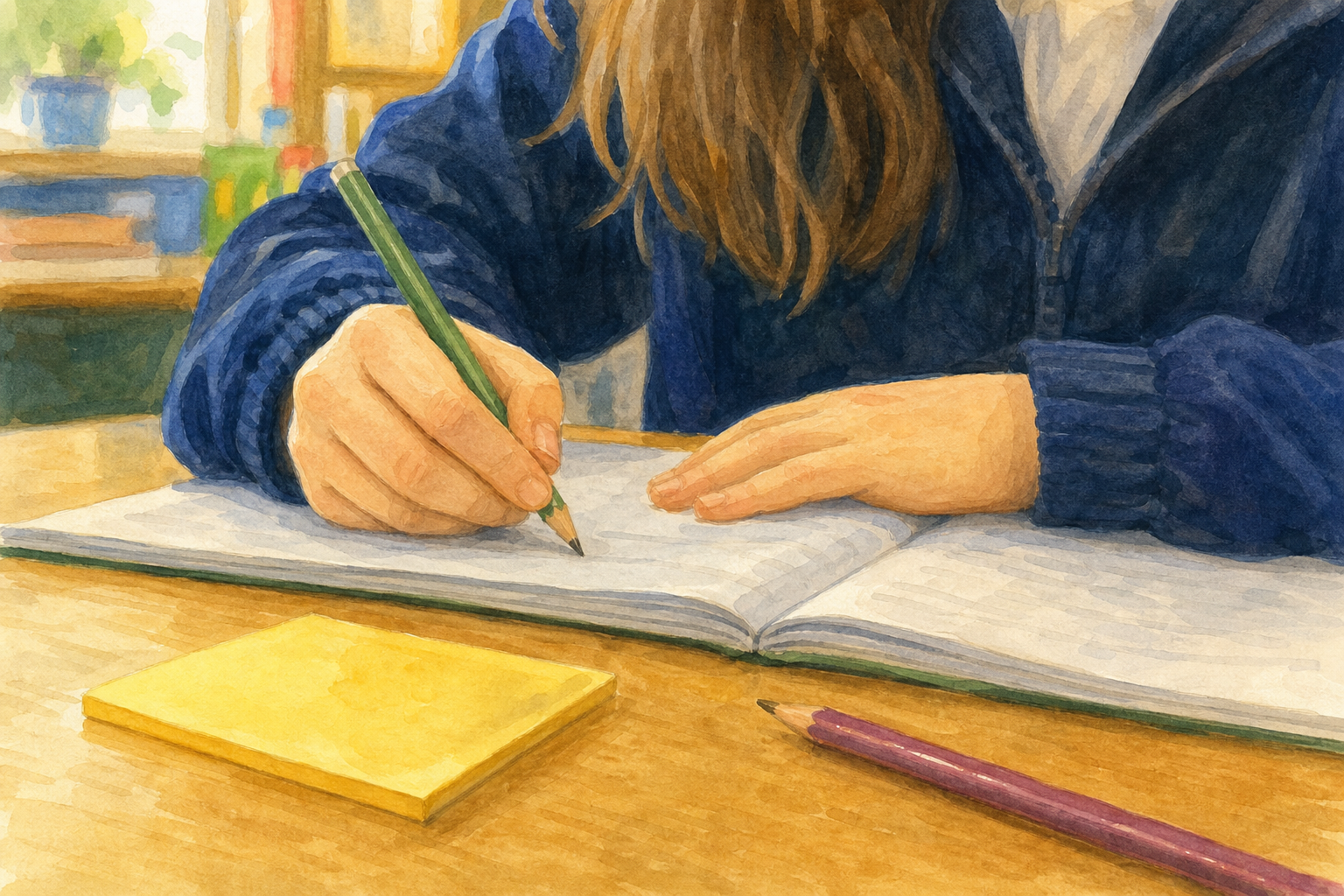
Your Investigation Journal page (or your three-box sheet) is waiting on your desk. Find the sticky note you starred on the walk. First, copy it across into the first two boxes: I noticed (draw or write the thing) and it does (its job).
Now for the last box, how we could find out. Take your wonder about that thing and turn it into a question. Remember, a good question starts with a word like does, which, how or what happens if.
Have the journal pages (or ruled three-box sheets) out on desks before the children return so they sit straight down to it — the only things they carried on the walk were clipboards and sticky notes. This is the paper recording beat. Children copy from their starred sticky note into the three boxes, so the walk recording flows straight into the journal.
Run it as two beats, not one. First get everyone to copy the 'I noticed' and 'it does' boxes — a quick, low-pressure copy. Only then point them at the harder 'how we could find out' box. Splitting it stops the copying and the question-making from landing at the same moment. The common stumble: children write a statement, not a question — gently reshape it, e.g. 'the puddle dries up' becomes 'does the puddle dry faster in the sun?'. Give a sentence starter on the board: 'I wonder... does... ?'
Let's sit together and share. Take turns telling the class one thing you noticed, what it does, and your 'how could we find out?' question. As we share, we will pin the best questions to our class wonder wall so we can investigate them over the year.
Circle-time share. Take a question from as many pairs as time allows and pin their sticky note (or journal-copied question) to existing wall or noticeboard space — the children's pinned notes are the wonder wall. Praise good question wording over getting an answer. Revoice statements into questions as you go. Keep it warm — every wonder is welcome.
Suggested timing: Share and pin: ~5 min.
Today we put on our STEM eyes. We noticed things, named what they do, and turned our wonders into questions. Those questions are the start of real science and engineering. Let's think together: which wonder on our wall would you most like to find out the answer to?
Display-only close. Take a couple of voices on which wonder they'd most like to investigate — this sets up the year's inquiries. Homework idea (oral): ask children to use their STEM eyes at home and notice one thing and what it does, ready to tell the class.
You're previewing this lesson. Get full access to this lesson and hundreds more — each one ready to teach, with interactive activities, printable resources and pupil progress tracking built in.