STE
Beginner
60 mins
Teacher/Student led
+70 XP

What you need:
IWB/Projector/Large Screen

What Do Living Things Do?

Investigate what living things do by comparing a snail and bean with non-living objects. Discover that living things grow, need food and water, and move or change by themselves.
Teacher Class Feed

Load previous activity

    1 - Getting Started ~5 mins

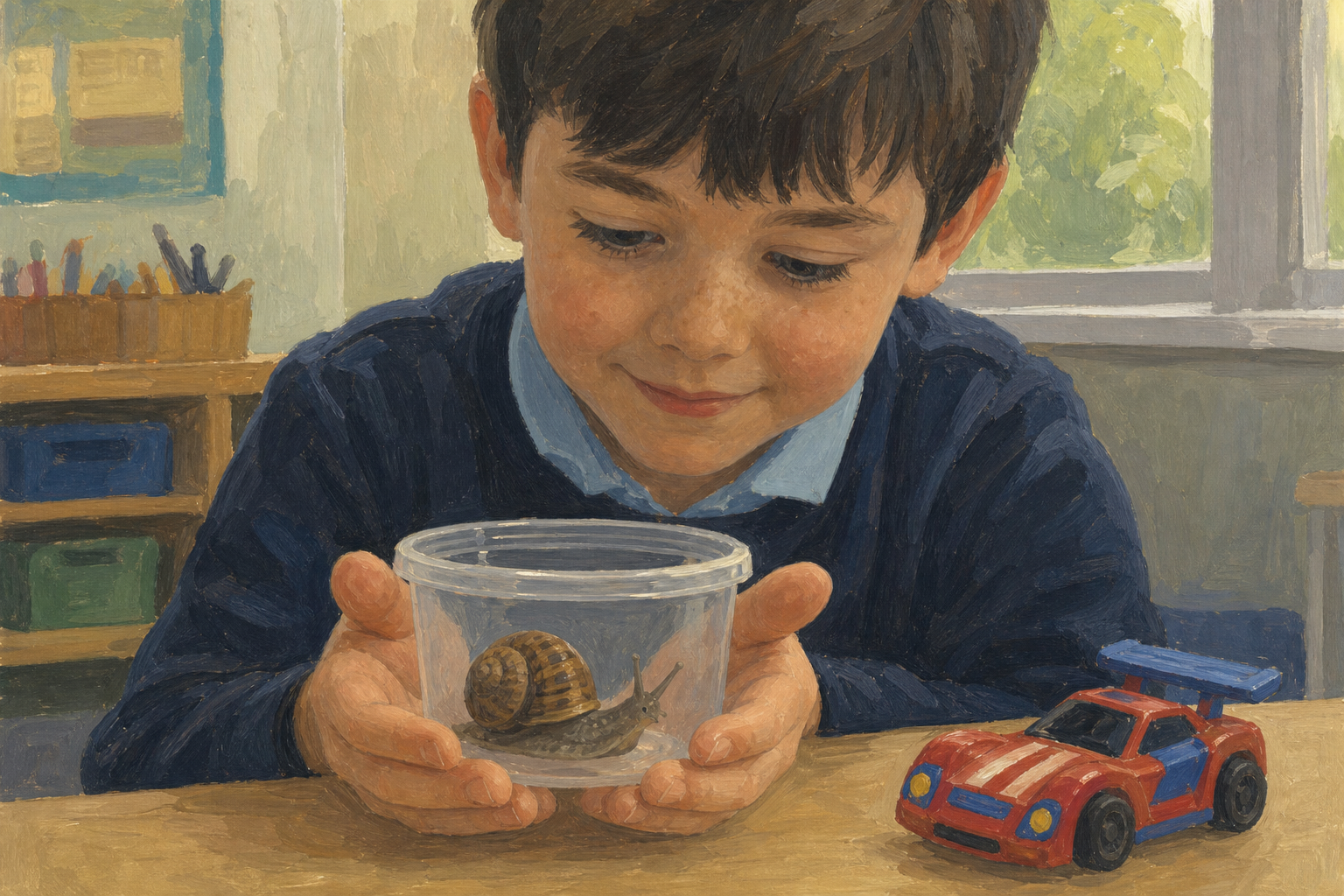
    Illustration for Getting StartedLook! Here is a little snail in a tub, and here is a toy car. One of them is alive and one is not. Which one do you think is alive? Put up your hand if you think it is the snail.
    Key point

    How can we tell? The snail does some special things that the car can never do. Today we are going to be detectives and find out what living things do.

    2 - What Living Things Do ~10 mins

    Living things do three special jobs that objects can never do. Let's learn them together.

    ConceptWhy it mattersExample
    Living thing — something that is alive, that grows, needs food and water, and moves or changesIt helps us tell the difference between a creature or plant and an objectA snail moves along the tub, eats a leaf and needs water to stay alive
    Non-living thing — something that is not alive and never grows, eats, drinks or moves by itselfObjects only move when we make them, so they are not aliveA toy car only rolls when you push it, and it never grows or gets hungry
    Grows — gets bigger over time, the way young living things doGrowing is one big sign that something is aliveA little bean seed pushes out a shoot and gets taller day by day

    3 - Watch and Compare at the Stations ~18 mins

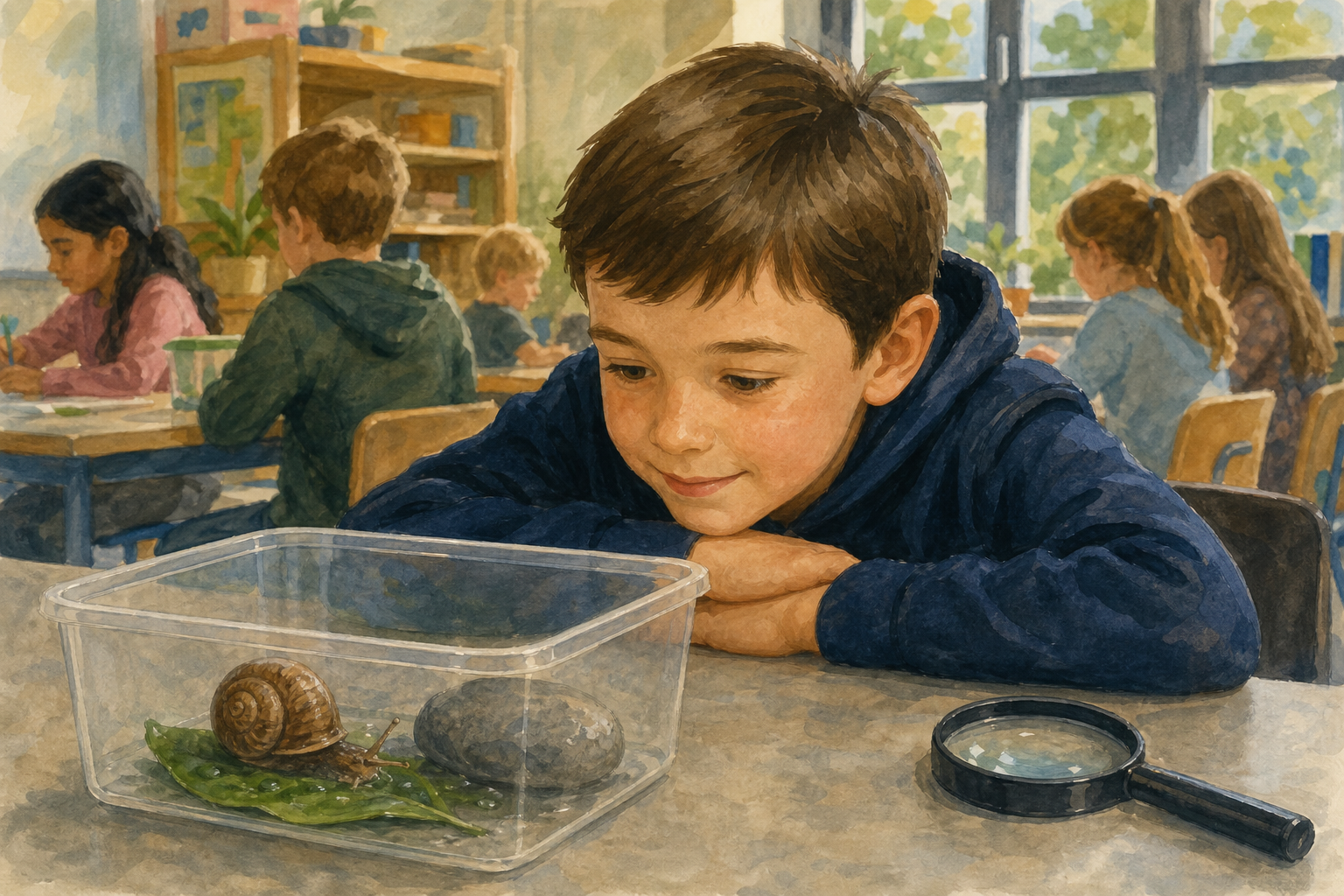
    Illustration for Watch and Compare at the StationsNow it is your turn to be a noticing detective. At each station you will look at one living thing and one object next to it.

    Key point

    First, before you look closely, tell your group what you think the living thing will do. Then watch very carefully. What does the snail or the bean do that the object never does? Does it move? Is it growing? Does it need food or water?

    Talk about it with your group, then we will write it down.

    4 - List What the Living Thing Does ~9 mins

    Let's sort what we noticed. On your journal page you have a living thing on one side and an object on the other.

    Key point

    In the middle, draw or write what the living thing does that the object never does. Did the snail move? Did the bean grow? Did the plant need water? Show your group your page when you finish.

    5 - What Makes a Living Thing Living? ~5 mins

    Let's talk together. What did the snail and the bean do that the stone and the toy car never did?

    Think about this

    Think about this: how do we know if something is alive? What three jobs do all living things do? Can you point to a living thing here in our classroom or out in the school garden?

    6 - What You Covered ~3 mins

    Today you were living-thing detectives. Here is what we found out:

    • Living things grow, need food and water, and move or change by themselves.
    • Non-living objects never grow, eat, drink, or move by themselves.
    • A snail moves and a bean grows, but a stone and a toy car always stay the same.
    • You can tell something is living by watching for these three special jobs.
    Pupil practice · Investigation Journal
    Module 1 · Living Things: Living, Non-living, Our Senses and Growing
    Lesson 3 · What Do Living Things Do?
    End of lesson
    123learn · Online learning platform

    Unlock the full learning experience

    You're previewing this lesson. Get full access to this lesson and hundreds more — each one ready to teach, with interactive activities, printable resources and pupil progress tracking built in.

    Hundreds of curriculum-aligned lessons
    Interactive activities in every lesson
    Printable resources & progress tracking
    Copyright Notice
    This lesson is copyright of 123Learn.ie 2017 - 2025. Unauthorised use, copying or distribution is not allowed.
    🍪 Our website uses cookies to make your browsing experience better. By using our website you agree to our use of cookies. Learn more