Wave your hands up high! Now stamp your feet! What did your hands just do? What did your feet do?
Today we are going to find out the special jobs our body parts can do. Our hands, our feet, our legs and our eyes are all busy helpers!
Keep this light and lively. Get the children moving straight away with a quick wave-and-stamp.
Ask "What did your hands just do? What did your feet do?" Take a few one-word answers. Don't list every body part here, that comes in the carousel.
Let's all stand up and try some jobs together!
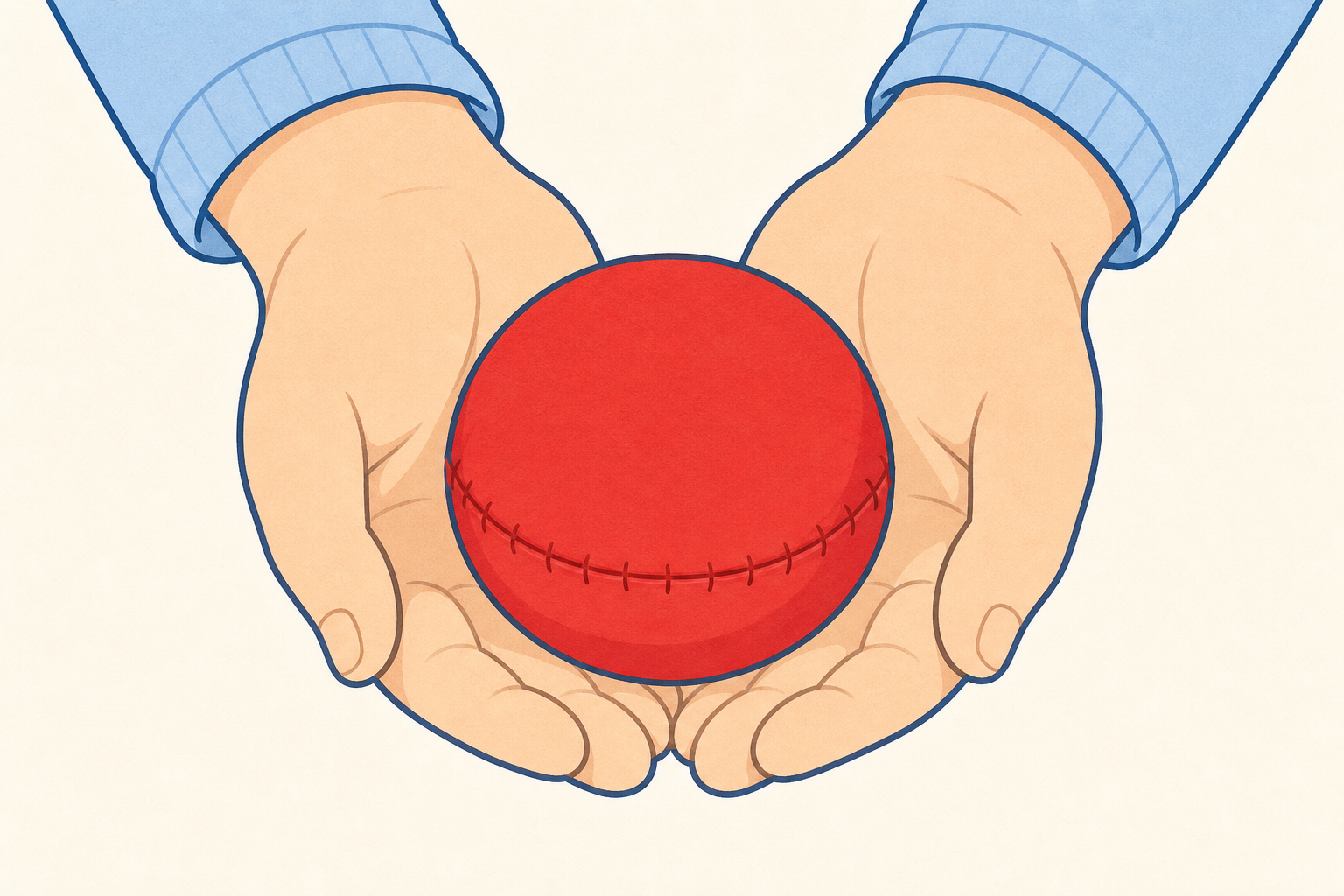
Hold up your hands. Can you hold a soft ball? Can you clap? Your hands are great at holding and clapping.
Now look at your feet. Can you hop on the spot? Your feet help you hop!
Now your legs. Can you walk on the spot, left, right, left, right? Your legs help you walk all around.
Now your eyes. Can you look up at the ceiling and down at the floor? Your eyes help you see everything.
This is the modelled cycle before the carousel. Demonstrate each mime yourself, then have the whole class copy.
Think aloud as you go: "I wonder what my hands can do? I'll try holding this ball. Look, my hands held it! Hands are good at holding." Do the same for feet (hop), legs (walk on the spot) and eyes (look).
Name the job out loud each time so children link the part to its job: hands hold, hands clap, feet hop, legs walk, eyes look. All five of these jobs are practised at the carousel stations, so model each one clearly here.
Now it is your turn to be busy body explorers! We will move around five little stations. When you get to a station, your teacher will show you what to try. Then mime the job like a superstar!
When you hear the clap signal, it is time to move on to the next station. Listen carefully for the clap!
At each station, say out loud which body part you are using.
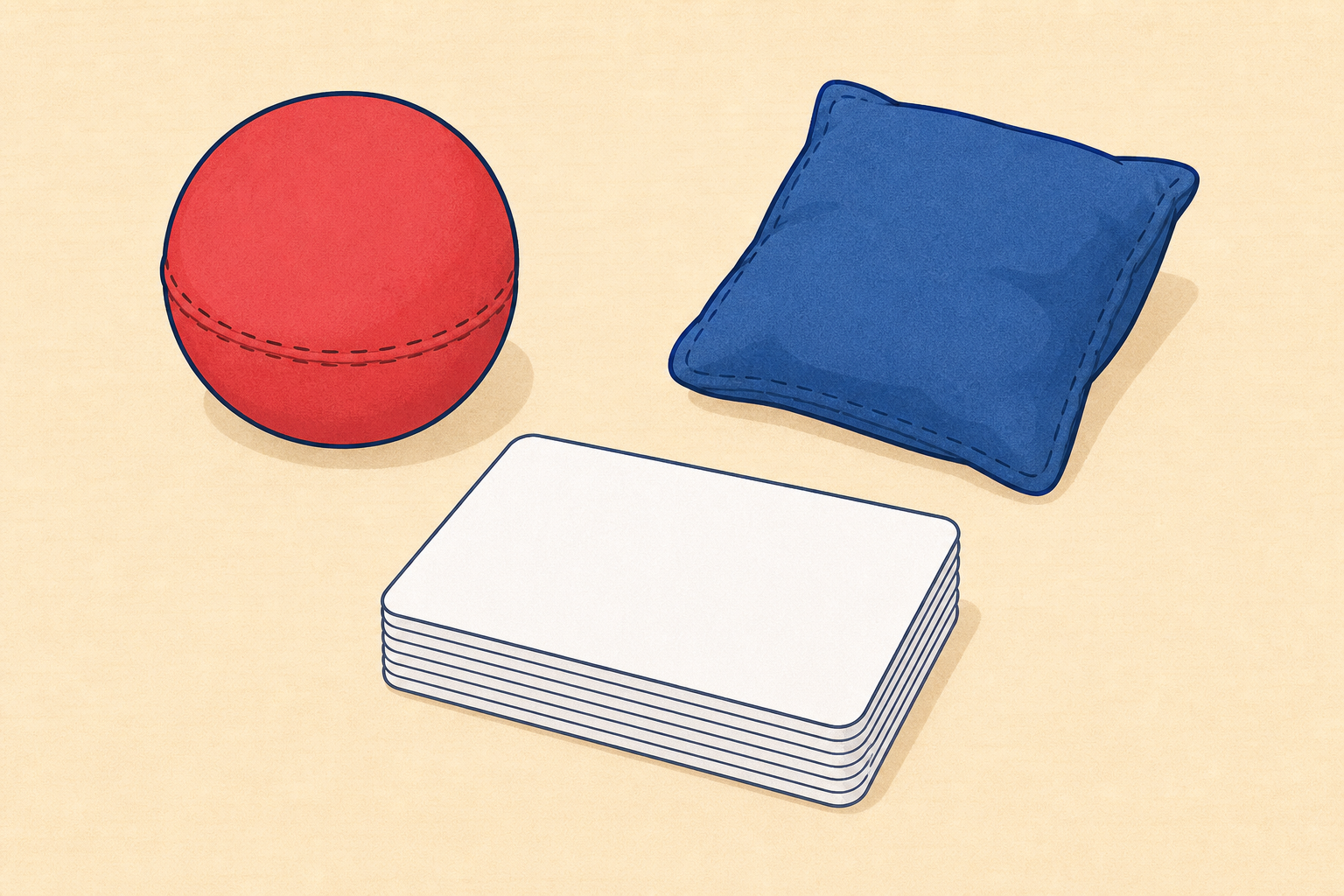
Before the lesson: set up five small stations around the room: a holding/passing station with soft balls and beanbags; a hopping station (a clear floor space); a marching/walking station (a short clear path or set of footprint cards to walk along); a clapping station; and a looking station with viewing frames or empty card frames.
Introduce one station at a time as each group arrives rather than reading all five tasks out at once. Say the cue for that station only: "At this station we hold and pass the soft ball", then "At this station we hop", "At this station we march and walk along the path", "At this station we clap a happy rhythm", "At this station we look closely through the frame." This keeps it simple for four and five year olds who cannot read the screen back.
Move the class round in small groups, about 2 to 3 minutes per station. Use one clear, consistent move-on signal every time (a rhythm clap, a bell or a short burst of music) so children learn to expect the change. Keep it joyful and fast.
At each station ask "Which body part are you using? What is its job?" Look for children naming the part and the job (hands hold, feet hop, legs walk, hands clap, eyes look).
Let's all sit in our circle and share. Hold up your hands. What job did your hands do today? Can you show me with a mime?
Now your feet. What did your feet do? And your legs, what did they help you do? And your eyes, what did they help you do?
A footballer kicks the ball again and again, over and over. Doing something over and over to get really good at it is called training. A swimmer trains by moving their arms again and again so they can swim far. When we train our body parts, they can do amazing jobs!
Let's all guess together, what do you think a runner trains? There is no wrong answer, let's say our ideas out loud.
This is the display-only make-sense talk. Children mime and say their answers; nothing is written.
Draw out the five jobs the children practised: hands hold, hands clap, feet hop, legs walk, eyes look. Revoice clearly each time. The children walked at the marching station in the carousel, so they have a real memory to anchor the 'legs walk' answer.
Anchor 'training' first. Before you ask the runner question, explain that 'training' means practising the same job over and over to get good at it. A young child may only know 'train' as a vehicle, so make the meaning concrete with the footballer kicking again and again. Then make it clear that guessing together is welcome so no child worries about being wrong: "Let's all guess, there is no wrong answer."
Bring in the who helps us thread: a sportsperson trains their body parts to do amazing jobs. Keep examples simple (footballer, swimmer, runner).
Tiny home noticing task: ask children to spot one job their hands do at home tonight (maybe holding a spoon or turning a page) and tell you tomorrow.
You were brilliant body explorers today! Our hands hold and clap, our feet hop, our legs walk, and our eyes look. Each body part has its very own job.
Each body part has its very own job.
Let's tidy our stations together. Pop the balls and beanbags back in the box and put the frames away.
Quick, safe pack-away. Praise the children for naming the jobs.
Close with a wonder: "I wonder what other amazing jobs our body parts can do?"
You're previewing this lesson. Get full access to this lesson and hundreds more — each one ready to teach, with interactive activities, printable resources and pupil progress tracking built in.